Proposal at Bir-Hakeim Bridge Paris: Best Spots, Timing & Packages
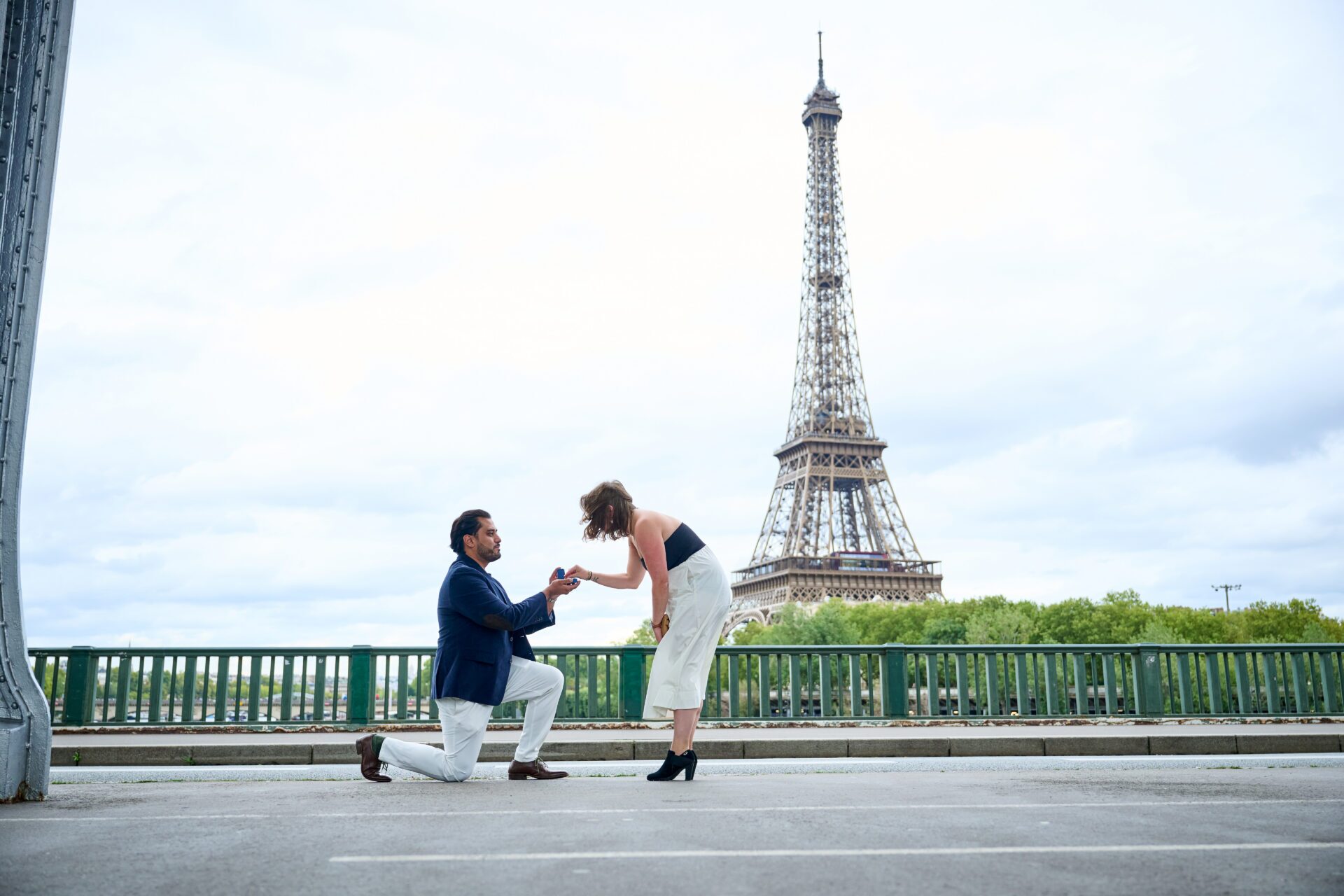
Most people who propose in Paris do it at the Eiffel Tower. Which means most proposals in Paris look exactly the same. If you want something that hits harder — the Eiffel Tower perfectly centered in the frame, the old iron metro viaduct overhead, the Seine below, and almost no one else in the shot — Bir-Hakeim Bridge is where you go.
It’s the most cinematic proposal spot in Paris, and a lot of couples have no idea it exists. This guide covers exactly where to stand, when to arrive, and how to work with a Local Lens Paris photographer to capture the whole thing without your partner seeing it coming.
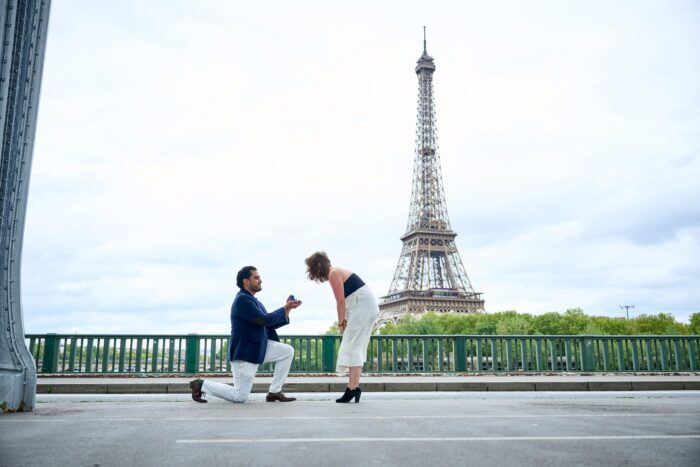
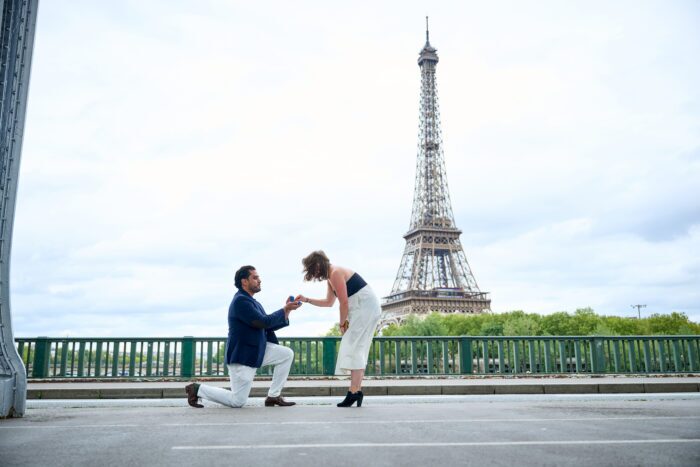
Bir-Hakeim Bridge Proposal Packages
A Local Lens Paris photographer handles the logistics so you can focus on the moment. They know exactly where to position themselves on the bridge — or on the riverbank below — so your partner never spots them before you’re ready. Here’s what our Paris proposal packages include:
- Pre-shoot consultation — your photographer scouts the exact spot with you (virtually or in person) and confirms the best position for the Eiffel Tower framing you want
- Discreet positioning — your photographer arrives early and blends in before you and your partner cross the bridge
- Coverage of the proposal moment + portraits after — candid shots during the ask, then relaxed couple portraits along the bridge and riverbank
- Edited gallery delivered within 5 business days
- Private online gallery — download in full resolution, share with family the same day
👉 See Paris Proposal Photography Packages →
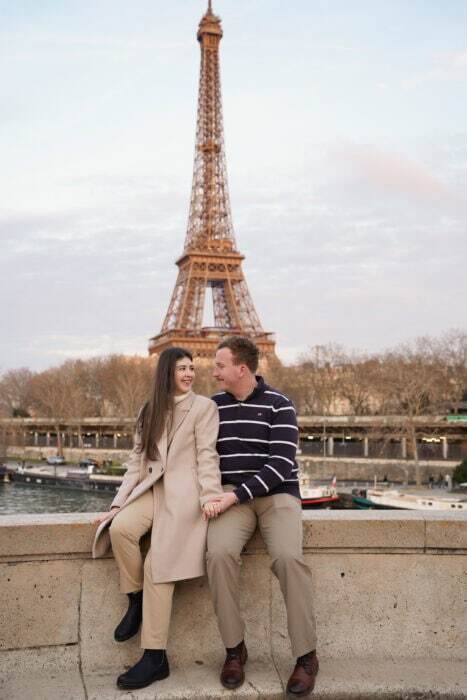
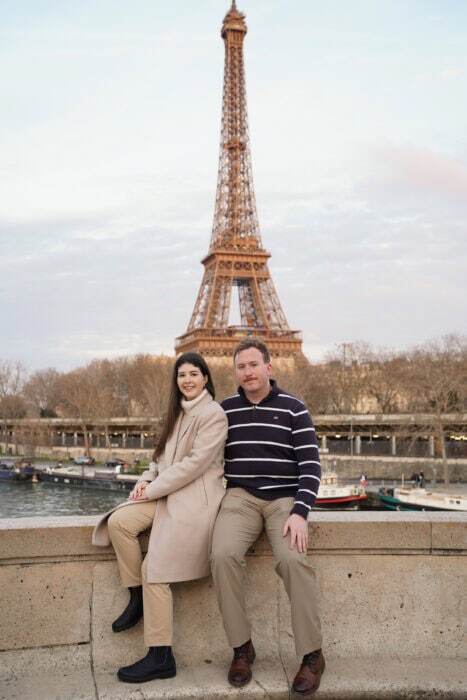
Why Bir-Hakeim Bridge is the Best Proposal Spot in Paris
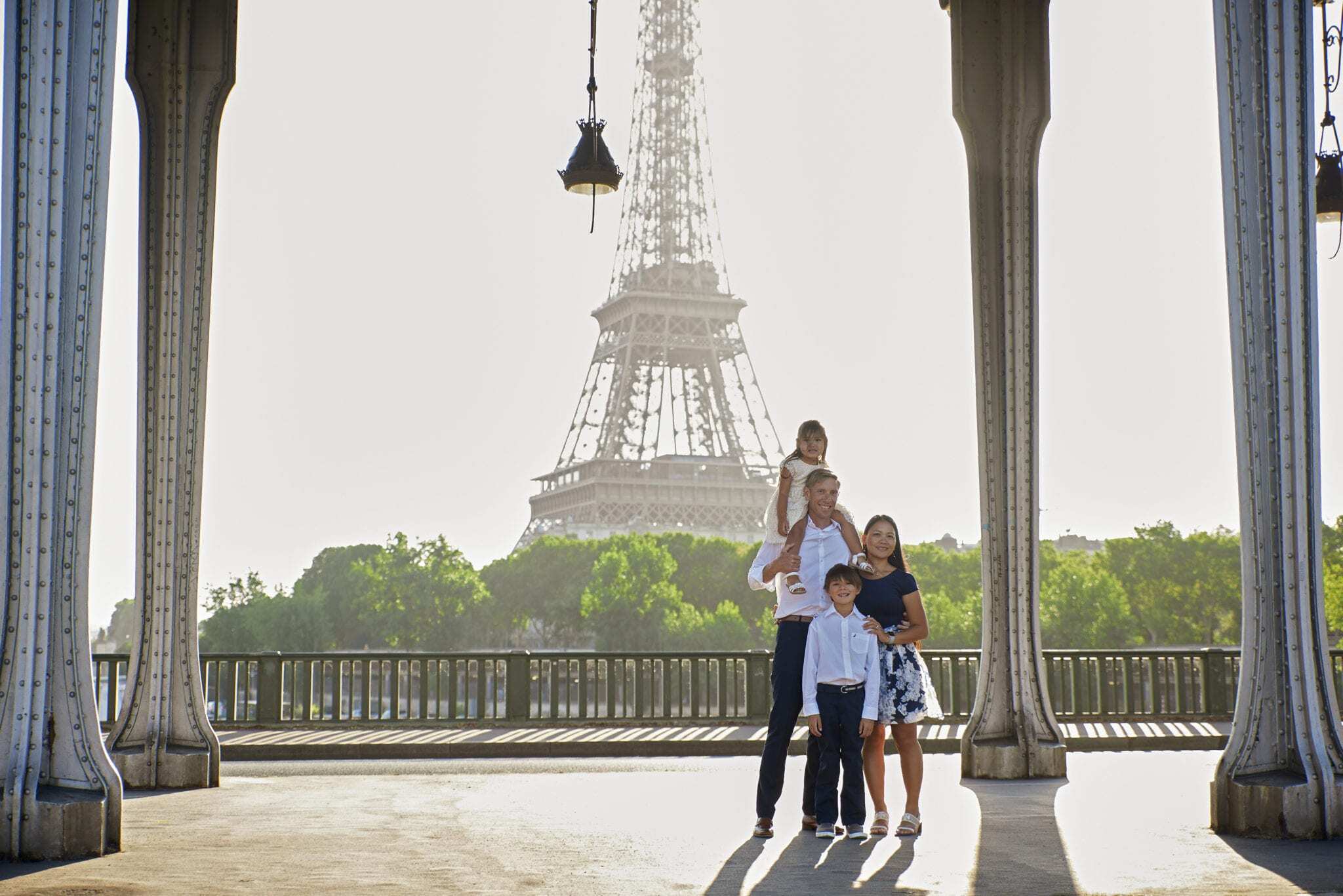
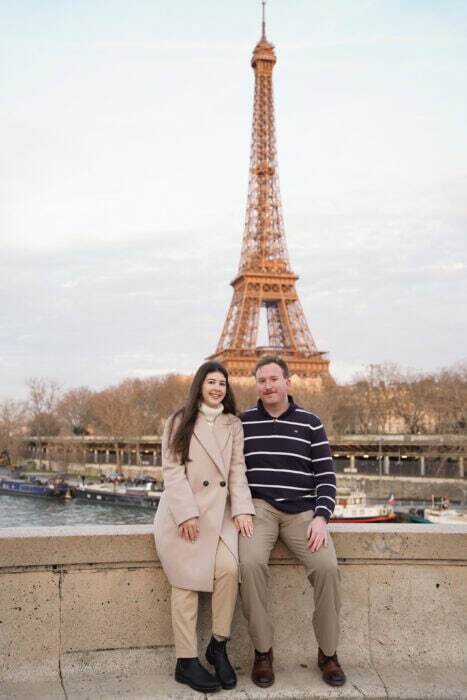
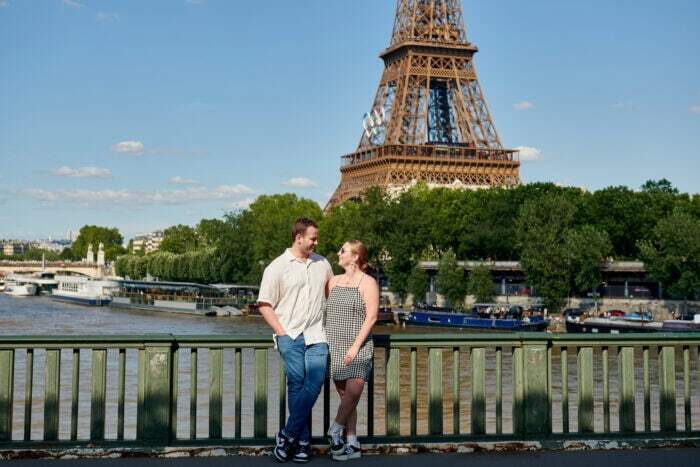
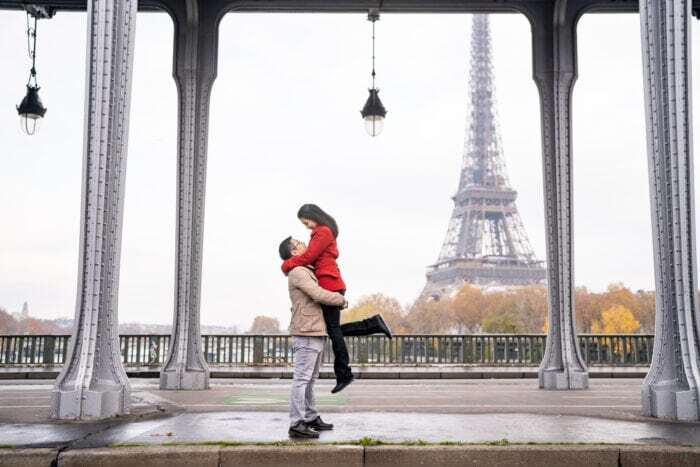
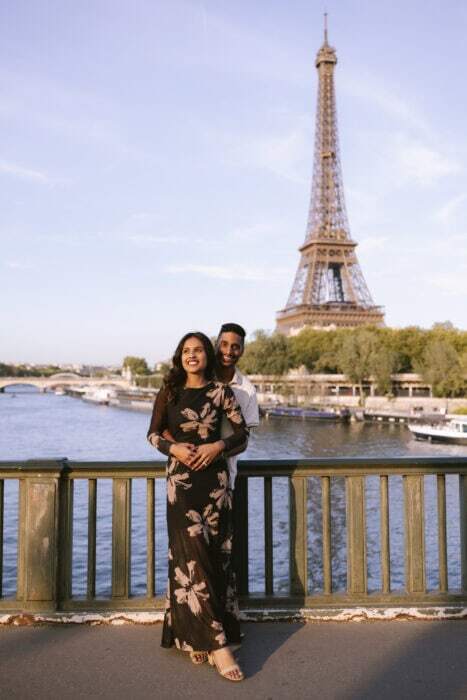
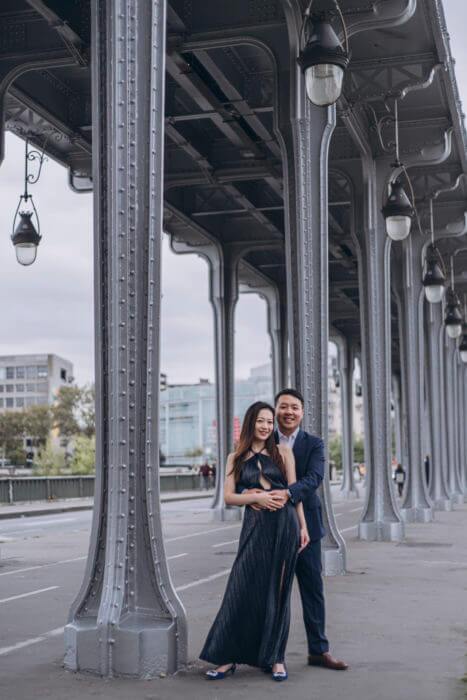
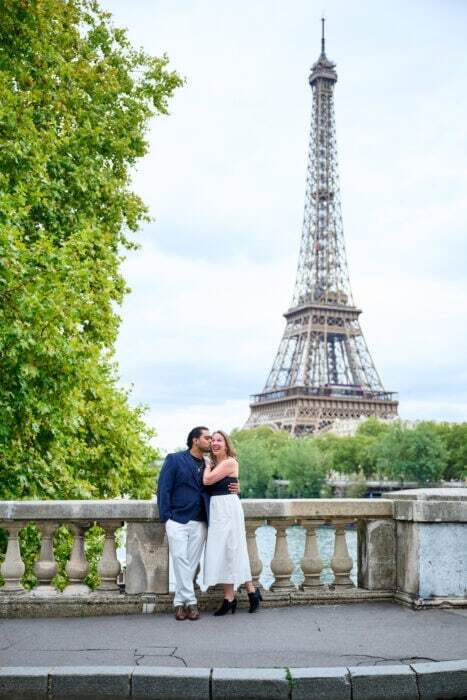
Bir-Hakeim Bridge has been stopping people in their tracks since 1905. It’s a double-decker iron bridge — pedestrians and cyclists on the lower level, the Metro Line 6 on the viaduct above — and it crosses the Seine in the 15th and 16th arrondissements. But the reason it became a proposal spot, and a favorite for photographers, is pure geometry: stand at the right point on the bridge and the Eiffel Tower lines up directly at the end of the span, perfectly centered, close enough to fill the frame.
You’ve seen this shot before and didn’t know where it was. The movie Inception folded Paris in half on this bridge. Dozens of fashion editorials have used it. Fashion photographers, elopement photographers, and proposal photographers all come back to it because the structure is just that good — ornate iron pillars, green patina, layered arches overhead. There’s no other bridge in Paris that gives you this combination of architectural drama and Eiffel Tower proximity.
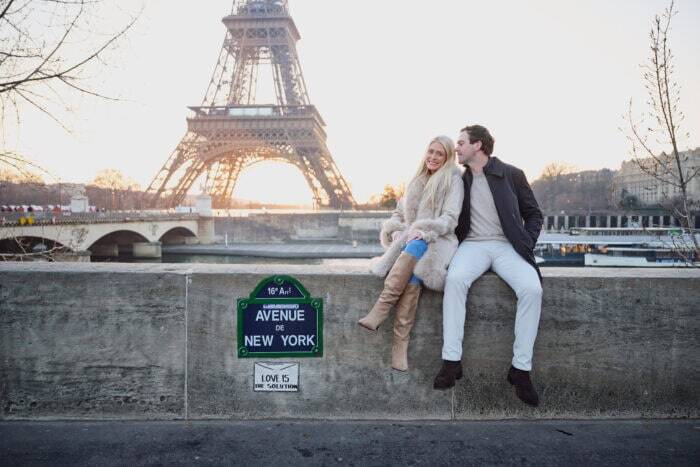
And because most tourists default to the Trocadéro or the Champ de Mars for their Eiffel Tower photos, Bir-Hakeim stays relatively quiet — especially outside peak afternoon hours. That matters a lot when you’re trying to orchestrate a surprise proposal.
Already know you want the Eiffel Tower in your proposal photos? Also read our full guide to proposing at the Eiffel Tower in Paris for everything from on-tower options to Champ de Mars logistics.
👉 See Paris Proposal Photography Packages →
Best Spots on Bir-Hakeim Bridge for Your Proposal
The bridge is about 235 meters long, and not every position gives you the same shot. Here are the four locations your photographer will discuss with you during your consultation.
The Center Span — The Signature Frame
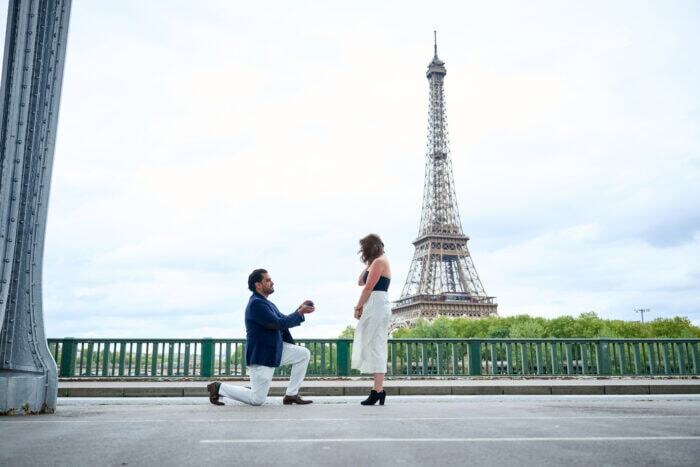
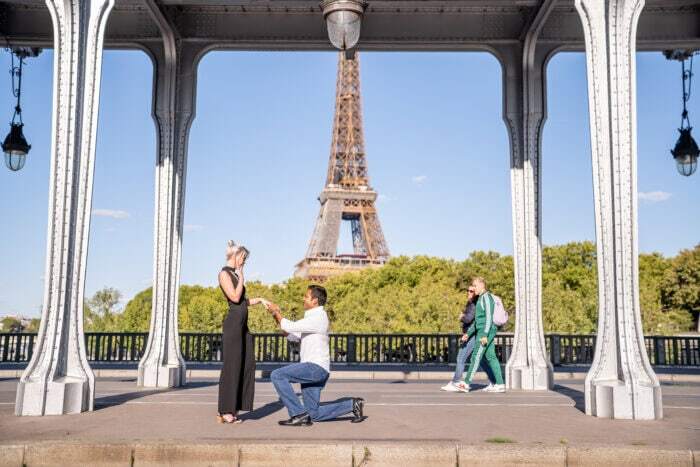
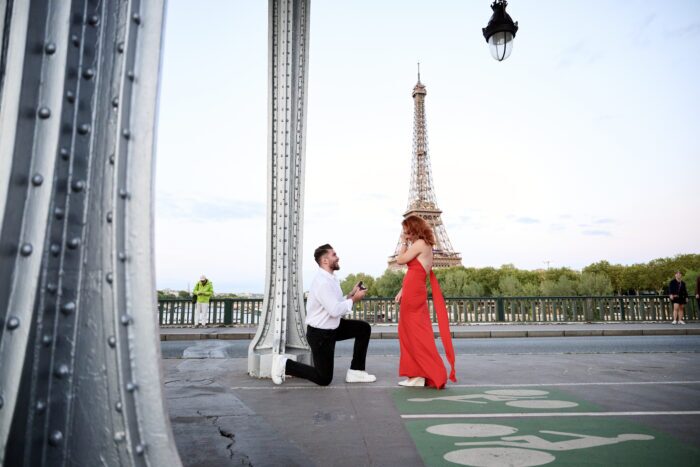
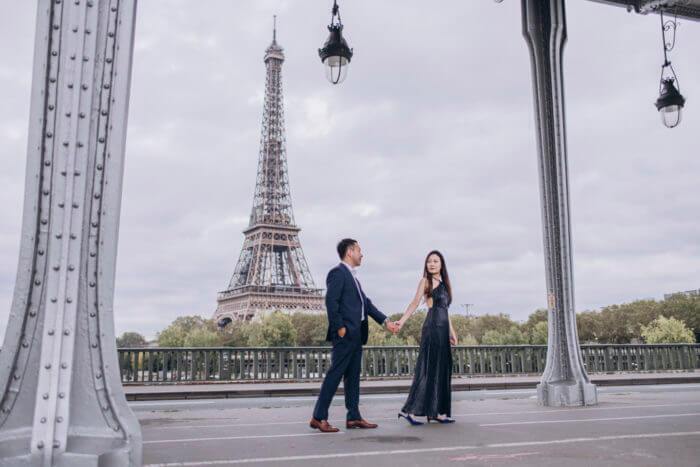
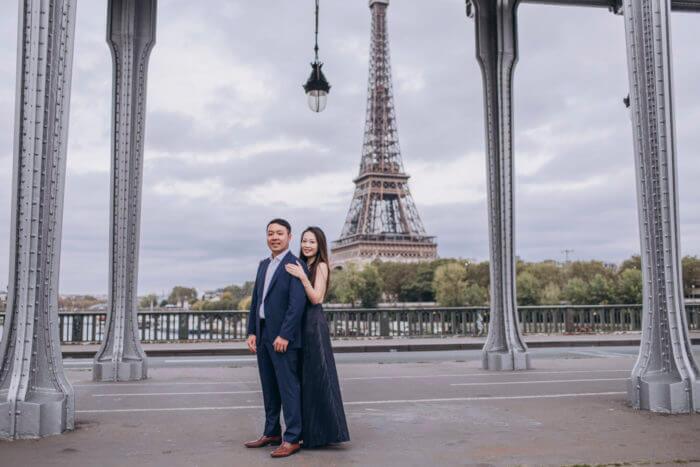
This is the shot. Stand near the middle of the lower pedestrian level, face toward the Right Bank side, and the Eiffel Tower appears perfectly centered at the end of the bridge’s iron corridor. The ornate lamp posts and arching green metalwork frame your photo on both sides. For a proposal, one of you faces the tower — the other goes down on one knee. Your photographer, positioned further along the bridge or at the end, captures the whole thing with the tower directly behind you.
Best for: The classic Bir-Hakeim shot — Eiffel Tower framed by iron arches, couple in the center lane. Works for both the proposal moment and portraits after.
The Metro Viaduct Angle
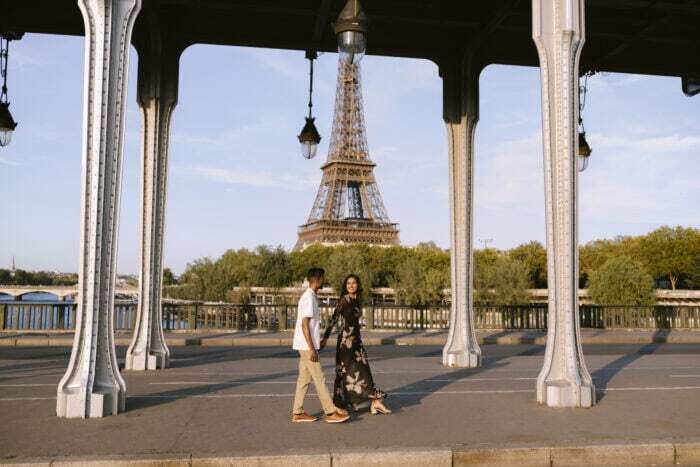
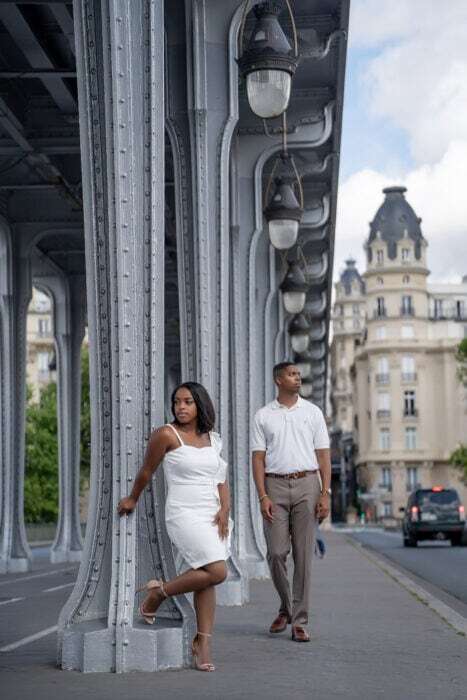
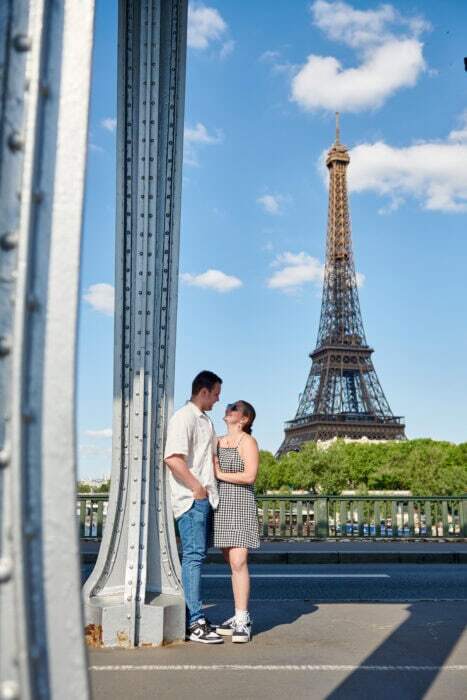
The upper viaduct creates an entirely different frame. From below, the elevated train track runs overhead while light filters through the iron structure at an angle — especially striking in early morning when the sun is low on the Right Bank side. A photographer standing at the end of the bridge or at the riverbank below can frame you under the viaduct with the Eiffel Tower visible in the far background. This angle is more editorial and moody; it suits couples who want something less symmetrical and more layered.
Best for: Alternative angles, portrait series after the proposal, couples who want a less conventional shot.
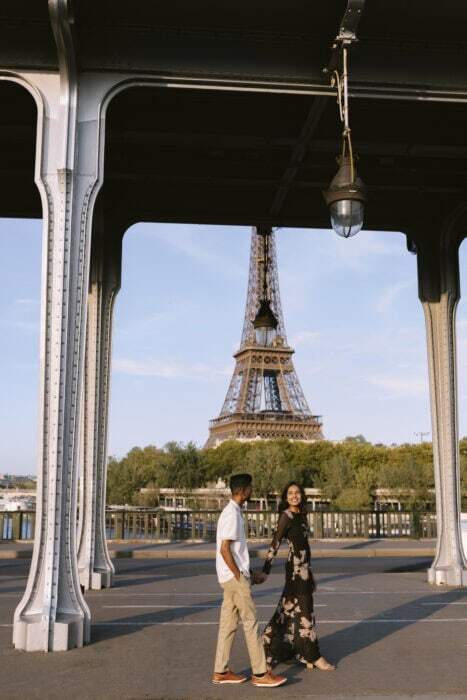
The Île aux Cygnes End — Allée des Cygnes Access
At the center of the Seine, the bridge passes over a thin artificial island called Île aux Cygnes. You can descend a staircase from the bridge down to the island’s tree-lined promenade, the Allée des Cygnes, which runs along the river with a view back toward the bridge and the Eiffel Tower beyond. This spot works well for portraits after the proposal — the narrow promenade is shaded, calm, and almost entirely free of crowds. It also gives you a unique reverse angle, looking back at Bir-Hakeim with the tower rising above.
Best for: Portrait session after the proposal, couples who want variety in their gallery, calmer riverfront shots.
The Riverbank Below — Ground Level
The riverbank on the Left Bank (15th arrondissement) side of the bridge gives your photographer a low-angle view looking up at the bridge structure with the Eiffel Tower beyond. From this position, the tower appears above and behind the bridge’s ironwork — a more dramatic, architectural frame than shooting from the bridge itself. If your photographer is covering the proposal discreetly from a distance, the riverbank is often the best place for them to position without being visible to your partner on the bridge above.
Best for: Discreet proposal photography from a distance, dramatic wide shots that include the full bridge structure.
Best Time to Propose at Bir-Hakeim Bridge
Best Time of Day
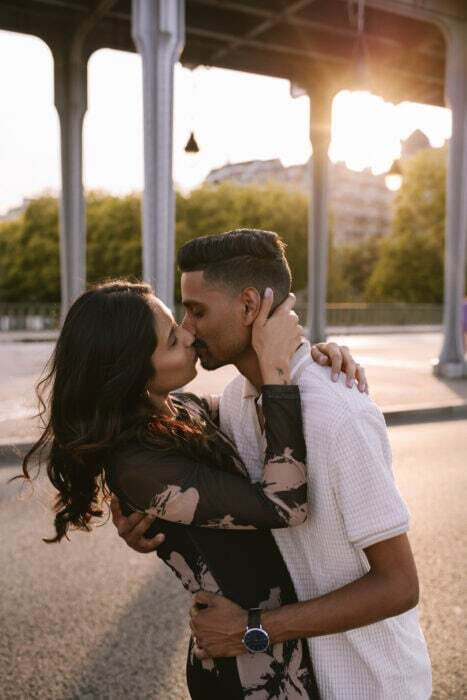
Golden hour — the hour after sunrise or the hour before sunset — is the best light you’ll get on this bridge. In the morning, the low sun hits the Right Bank side and lights up the Eiffel Tower from behind; the bridge itself is in soft shadow, which creates a naturally dramatic contrast. In the evening, the tower glows warm gold and the bridge lamps switch on as the sky fades. Either window gives your photographer a frame that’s hard to manufacture any other time of day.
Midday light on the bridge is harsh and flat. Crowds are also at their worst from 11 a.m. to 3 p.m. — tour groups walking to the Eiffel Tower often cross Bir-Hakeim as part of their route. Avoid this window if you can.
The Eiffel Tower Sparkling Light Show
The Eiffel Tower sparkles for five minutes at the top of every hour from sunset until 1 a.m. (2 a.m. in summer). If you time your proposal for just before the top of the hour, your photographer can capture the moment the sparkle begins — the tower lighting up like a burst of champagne behind you. It’s one of those things that looks almost too good to be real in photos. Build the extra fifteen minutes into your timeline so you’re in position before it starts.
Note: the sparkle show was temporarily paused during certain periods for energy conservation. Check current schedules at the official Eiffel Tower site before you plan around it.
Best Season
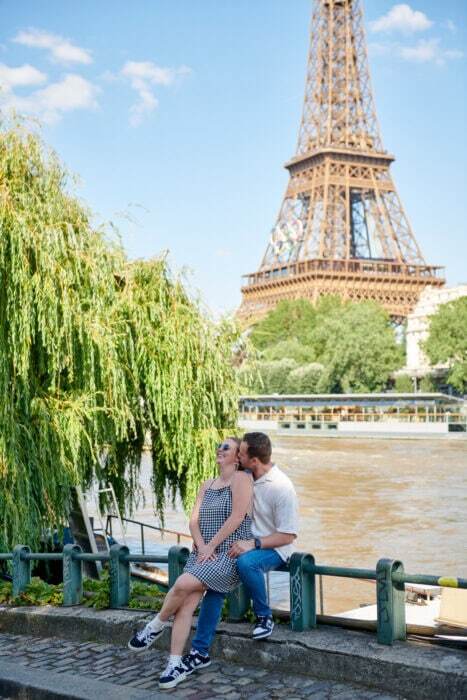
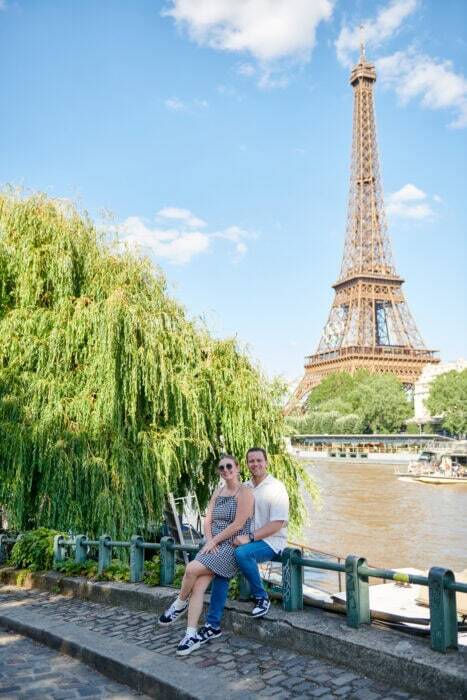
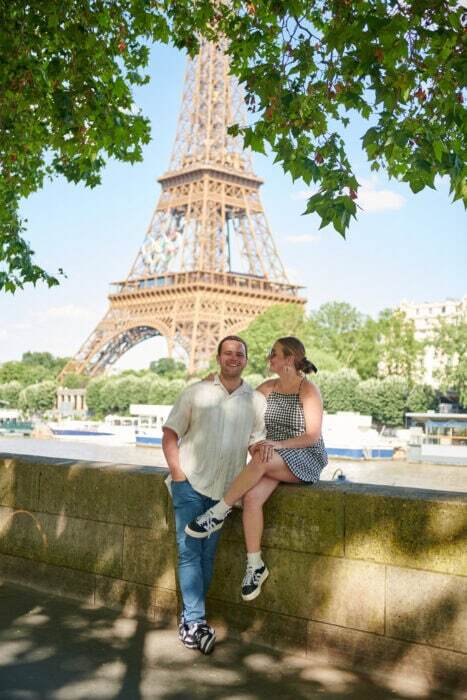
April through June is the sweet spot — the days are long, the trees along Île aux Cygnes are in leaf, the weather is reliably mild, and Paris hasn’t hit peak tourist density yet. September and early October are a close second: crowds thin out after August, the light turns golden earlier in the evening, and the whole city has a calmer, more intimate feel.
July and August work but require earlier mornings — the bridge can get congested by mid-morning and stay that way until evening. Winter proposals (November through February) are quieter and can be extraordinarily atmospheric — cold air, fog off the Seine, fewer tourists, the tower lit warm against a dark sky. Dress accordingly, and you’ll have the bridge almost to yourself.
👉 See Paris Proposal Photography Packages →
How to Avoid Tour Groups
Arrive before 9 a.m. or after 6 p.m. and you’ll avoid the bulk of the organized group traffic. The bridge sees a surge around 10–11 a.m. when walking tours from the Eiffel Tower area route through, and again around 2–4 p.m. Weekday mornings are significantly quieter than weekends. Your Local Lens photographer will know the patterns and can advise on the best window for your specific date and time of year.
How to Propose at Bir-Hakeim Bridge — Step by Step
Here’s how a Bir-Hakeim Bridge proposal comes together in practice, from booking to the moment you get down on one knee.
1. Book your Local Lens photographer first. Do this before you book flights or hotels. Paris in peak season fills up fast, and proposal photographers get booked weeks or months in advance. Locking in your photographer gives you a confirmed date to plan everything else around.
2. Do a virtual scout with your photographer. Share the approximate time of year you’re proposing, whether you want daytime or evening, and which angle you’ve seen and loved (the center span framing is most popular). Your photographer will recommend the exact time window based on light and crowd patterns for that season.
3. Build a reason to be on the bridge. “Let’s walk along the Seine” is a natural Paris activity that doesn’t raise suspicion. If your partner loves architecture, history, or film, you have even more cover — Bir-Hakeim is genuinely worth a visit. Avoid telegraphing where you’re going too far in advance; a casual “I heard there’s a great view from this bridge” works fine.
4. Your photographer arrives 15–20 minutes early. They’ll position on the bridge or riverbank before you and your partner arrive, find the right frame, and blend in. They’re not hiding — they just look like any other photographer on a bridge in Paris, which is completely unremarkable.
5. Walk to the agreed spot. You’ll have worked this out with your photographer in advance — the center span, the specific pillar, the lamp post you want in the frame. Pause there naturally. Let your partner take in the view. Give your photographer a moment to get the frame locked in.
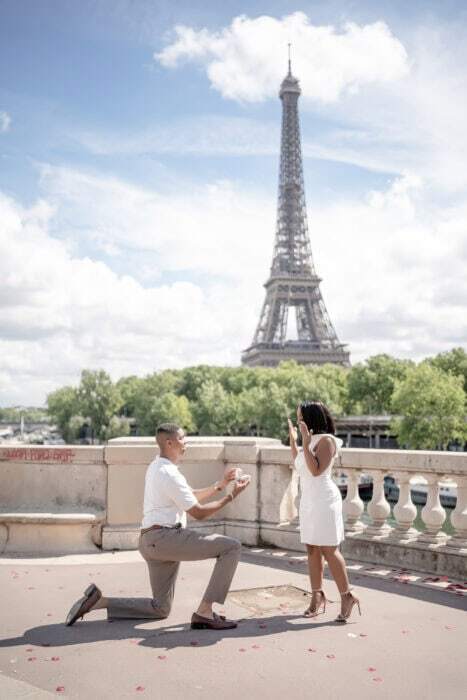
6. Propose. Face your partner, not the camera. The shot your photographer is after — the one that will go on your wall — is the genuine moment, not a posed one. The ring comes out, everything else takes care of itself.
7. Celebrate on the bridge, then keep shooting. After the moment, your photographer will come over and introduce themselves (if they haven’t already) and move into relaxed couple portraits. The bridge, the Allée des Cygnes below, and the riverbank all give you variety within a five-minute walk. Most couples wrap portraits within 45–60 minutes of the proposal.
8. If you’re proposing at night, time it to the sparkle. Get to your spot by ten minutes before the top of the hour. Your photographer will be ready. The sparkle lasts five minutes — plenty of time to capture the moment and the glow.
Also planning to visit the Trocadéro? Check out our full guide to proposing at Trocadéro, Paris — it covers the viewpoint, timing, and how to sequence both spots in one day.
Frequently Asked Questions
Do I need a permit to propose at Bir-Hakeim Bridge?
No permit is needed for the proposal itself — the bridge is a public pedestrian space open at all hours. Your Local Lens photographer will be familiar with any current requirements for professional photography in Paris public spaces and will handle that side of things.
Is Bir-Hakeim Bridge crowded?
Less crowded than the Trocadéro or Champ de Mars, but it’s not a secret. Before 9 a.m. and after 6 p.m., it’s consistently calm. Weekday mornings in spring or fall are the quietest. Midday on weekends — especially in July and August — is when it gets busiest.
Can I see the Eiffel Tower from Bir-Hakeim Bridge?
Yes, and the angle is better than almost anywhere else in Paris. Standing at the center of the bridge and facing toward the 16th arrondissement, the tower lines up perfectly at the end of the iron span. It’s the kind of shot that makes people ask “where is that?” when they see it.
When does the Eiffel Tower sparkle?
Five minutes at the top of every hour from sunset until 1 a.m. (2 a.m. in summer). Get to your spot ten minutes before the hour and your photographer will be ready when it starts.
How much does a Paris proposal photographer cost?
Local Lens Paris proposal packages start from approximately $250–$350 USD for a 30-minute session. Longer coverage is available. Check our current Paris packages page for exact pricing and real-time availability.
What’s the best time of year to propose at Bir-Hakeim Bridge?
April through June is the sweet spot — good light, mild temperatures, and the bridge isn’t at peak tourist volume yet. September and October are excellent. Winter is quieter and more atmospheric than most people expect; just factor in the cold.
Book Your Paris Proposal Photographer
Bir-Hakeim Bridge doesn’t care whether your proposal goes exactly to plan. But the photos will last for the rest of your lives — and getting a Local Lens photographer who knows the bridge, knows the light, and knows how to stay out of sight until the right moment makes a real difference. Browse our Paris photographers and book the date before someone else does.
👉 See Paris Proposal Photography Packages →
Planning more of your Paris proposal? These guides cover the other top spots: