Egypt Pyramids Photoshoot: Best Spots, Timing & Tips (2026 Guide)
There are maybe five places on earth where a photograph does something a vacation photo can’t: it makes the past feel real. The Pyramids of Giza are one of them. Built over 4,500 years ago and still standing, they’re the only surviving Wonder of the Ancient World — and one of the most extraordinary backdrops you’ll ever step in front of.
Whether you’re a couple looking for something more than a beach resort shoot, a family turning a bucket-list trip into lasting portraits, or a solo traveler ready to finally have photos that match the scale of the place you’re visiting — a Pyramids photoshoot delivers. But getting the right photos here takes planning. The site is massive, busy, and unforgiving in the midday sun. Get the timing wrong and you’ll be squinting into harsh light beside a tour group of 40.
Get it right, and you’ll have images that look like they came out of a magazine.
Here’s exactly how to plan it.
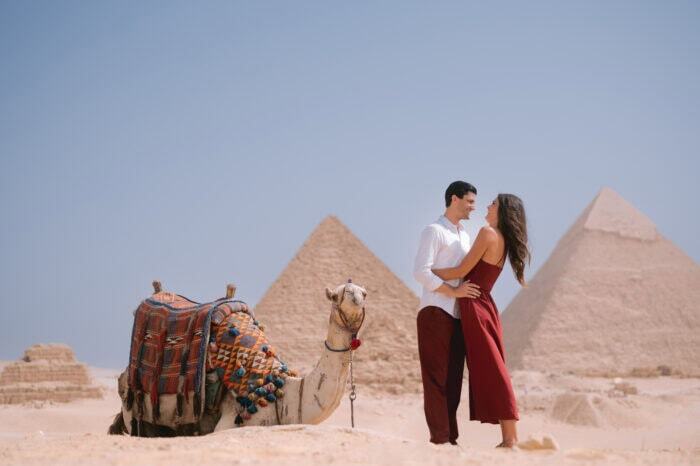
Best Spots for an Egypt Pyramids Photoshoot
The Giza Plateau is bigger than most people expect — the complex stretches over two square miles. These are the four spots that consistently produce the strongest images.
1. The Panoramic Viewpoint (All Three Pyramids in Frame)
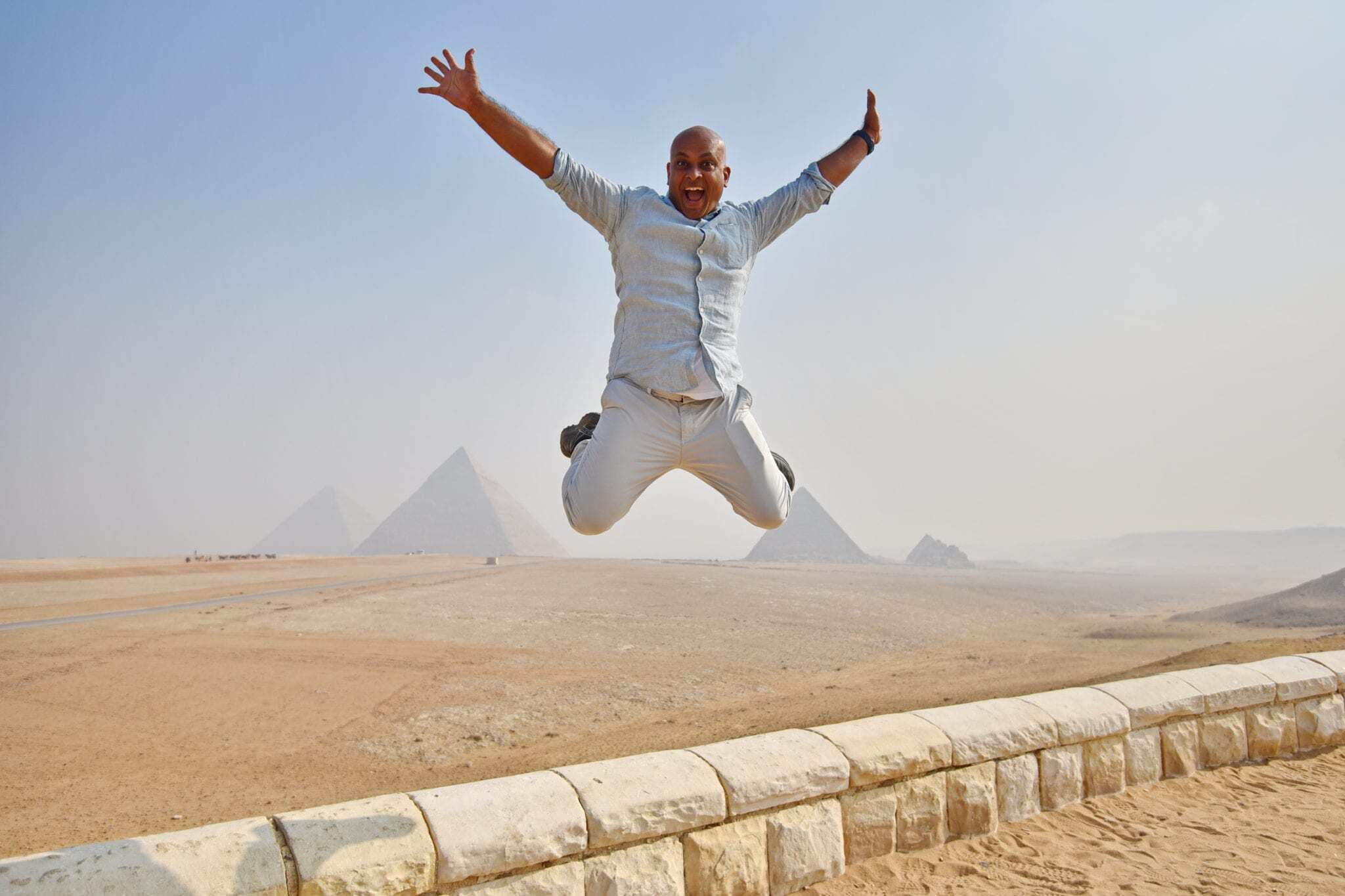
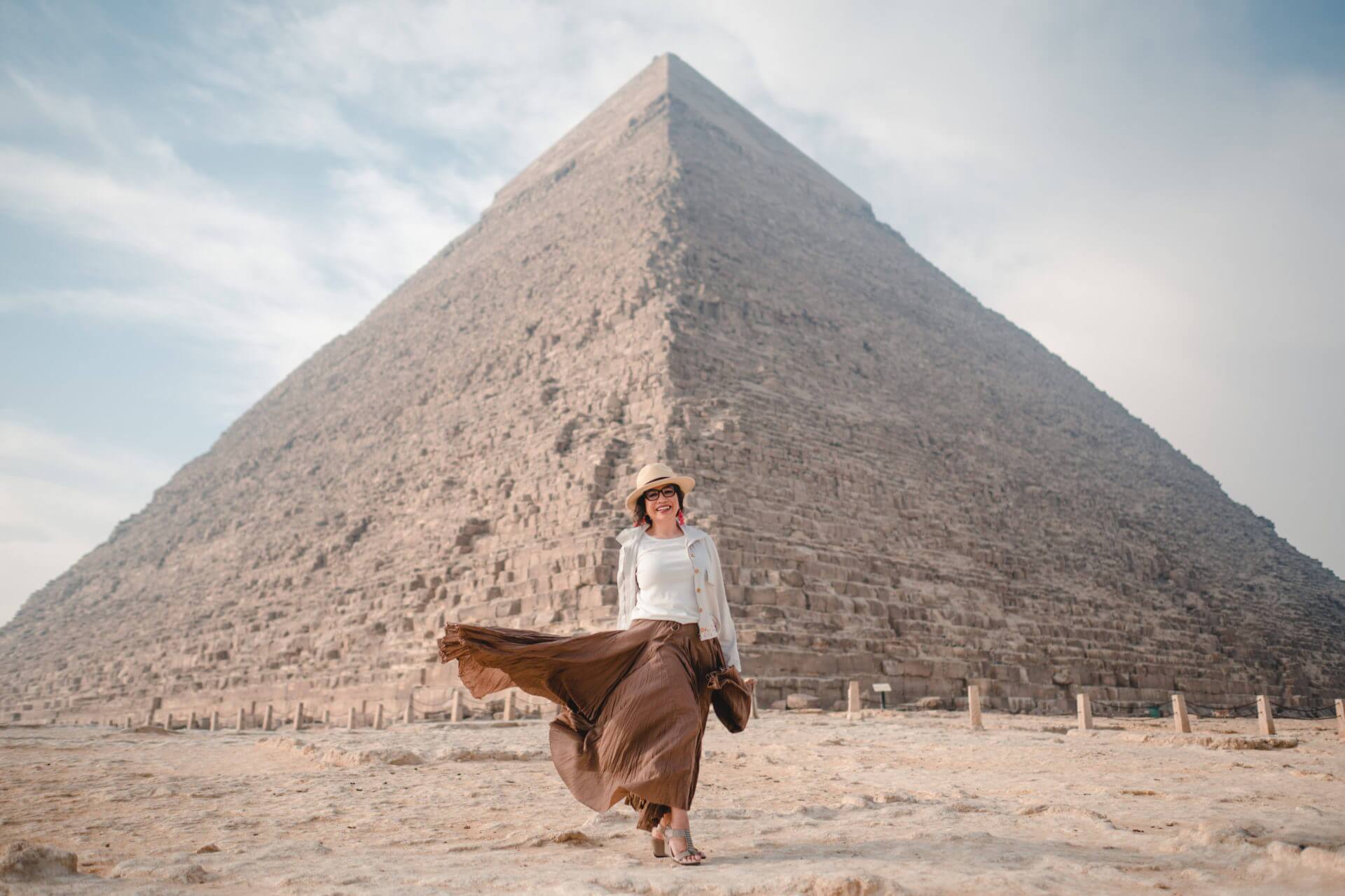
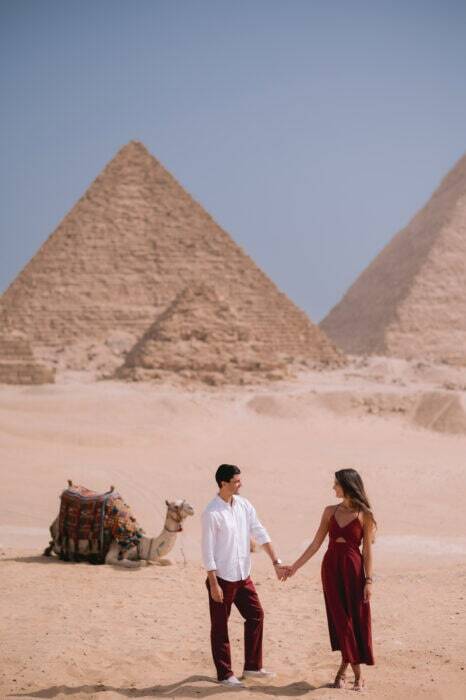
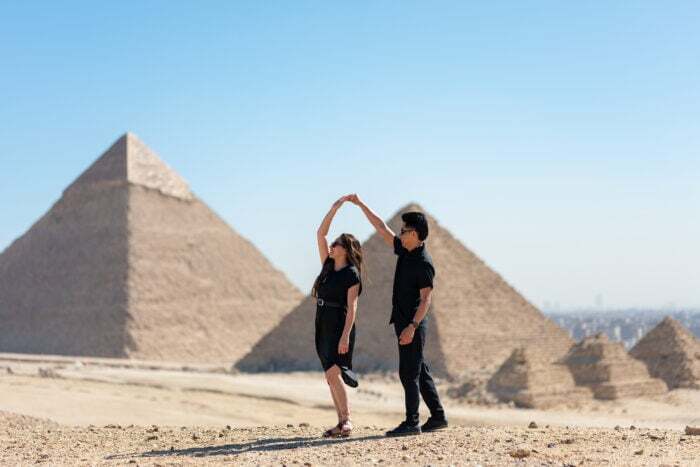
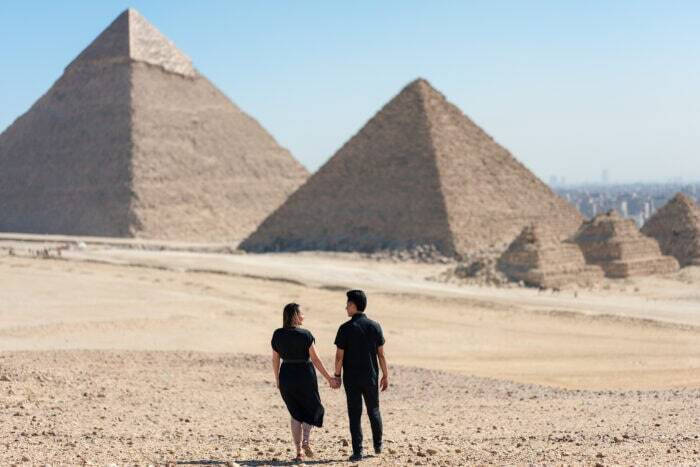
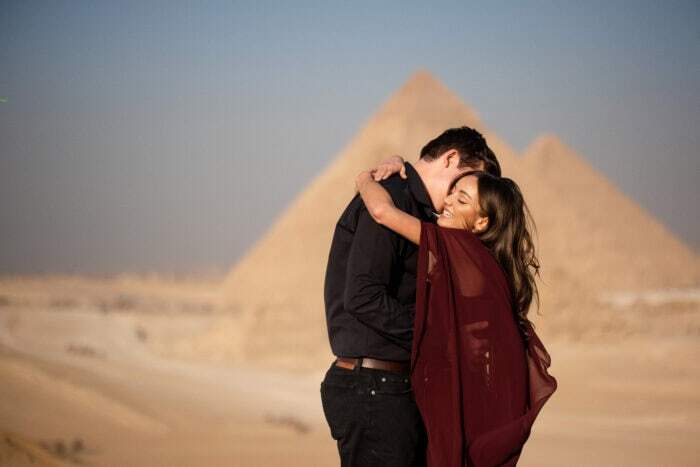
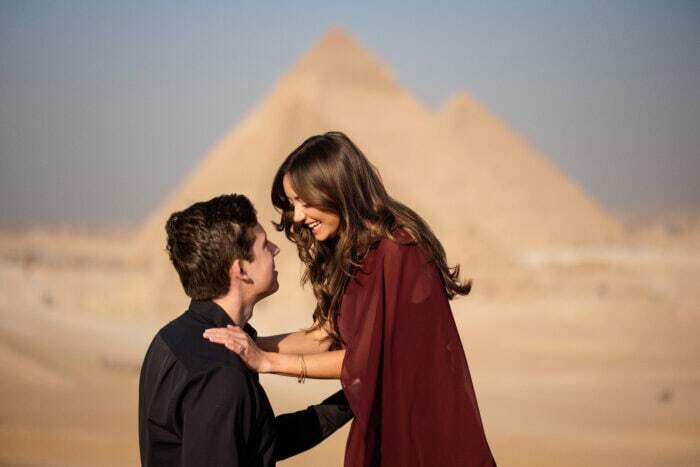
This is the shot everyone pictures before they arrive. The panoramic viewpoint sits on the desert plateau southwest of the complex and is the only place where all three pyramids — Khufu, Khafre, and Menkaure — line up in a single unobstructed frame. No cropping. No other tourists in the background if you arrive early enough.
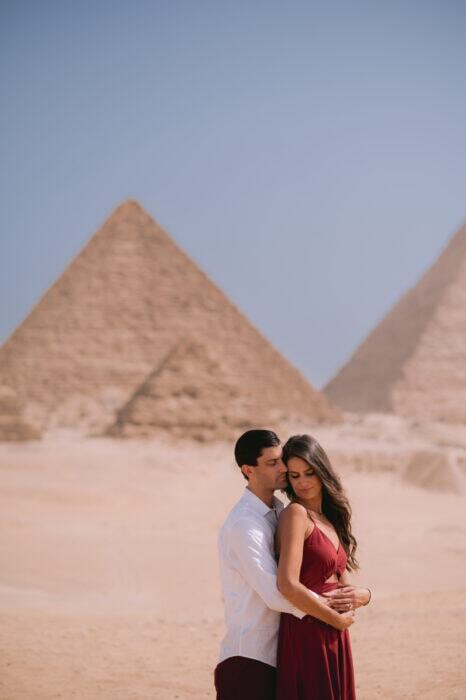
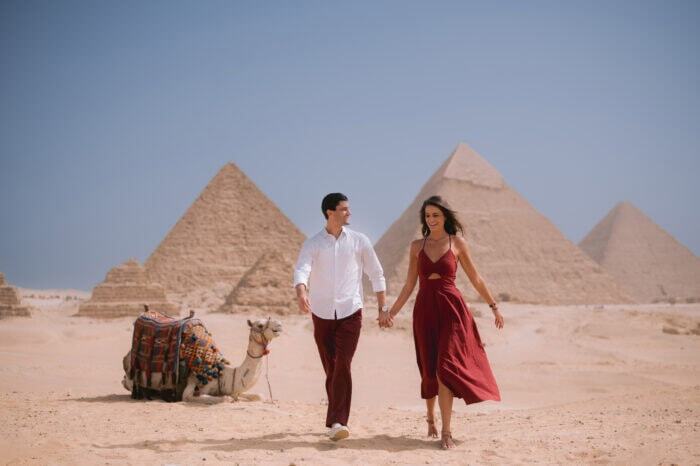
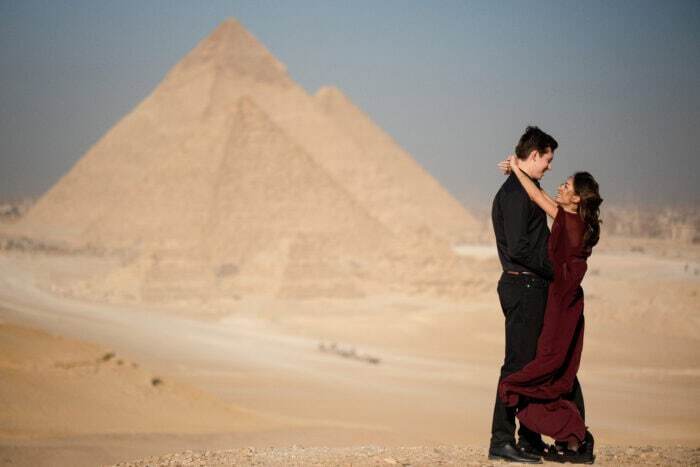
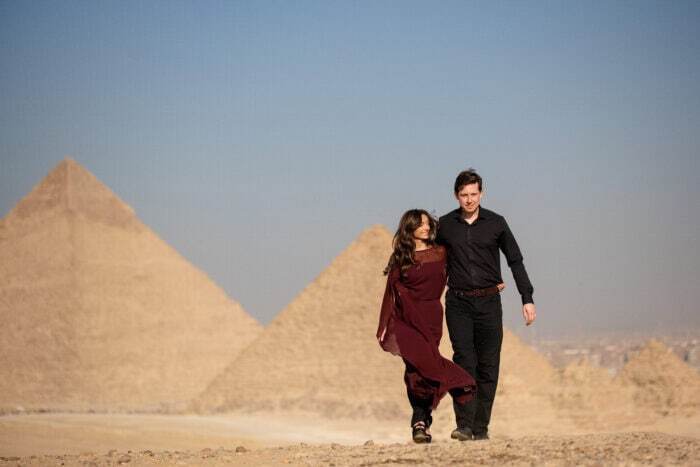
At sunrise, the light comes in low and warm from the east, casting long shadows across the sand and turning the limestone golden. For couples, this is where the most editorial-style images happen: walking away hand in hand, sitting on a low dune, one person standing while the other faces the camera. For families, it’s your group shot — everyone together with an ancient wonder doing all the heavy lifting behind you.
This spot sits outside the main ticketed entrance, accessible via a paved road on the western edge of the plateau. Your Local Lens photographer will know exactly when and how to access it.
2. The Great Sphinx
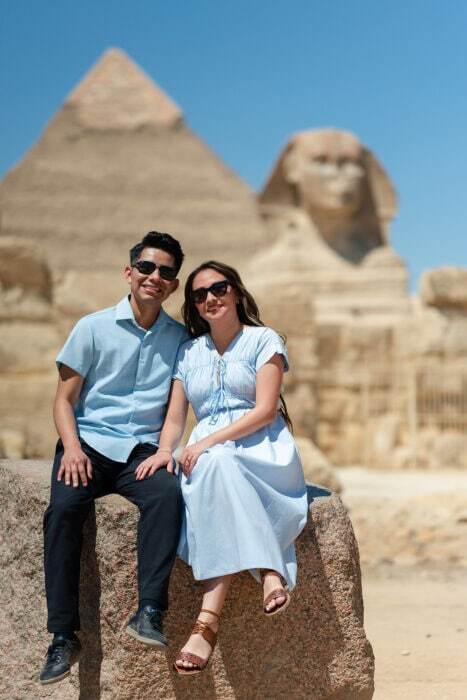
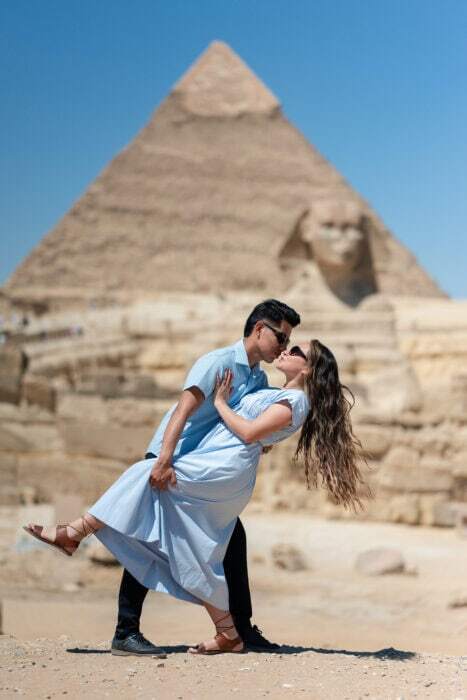
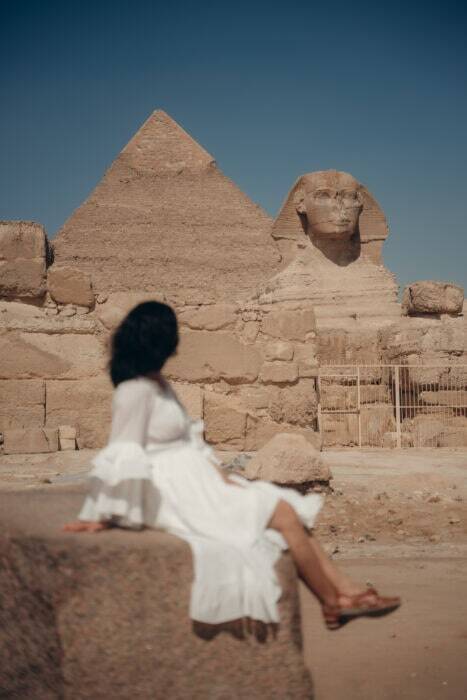
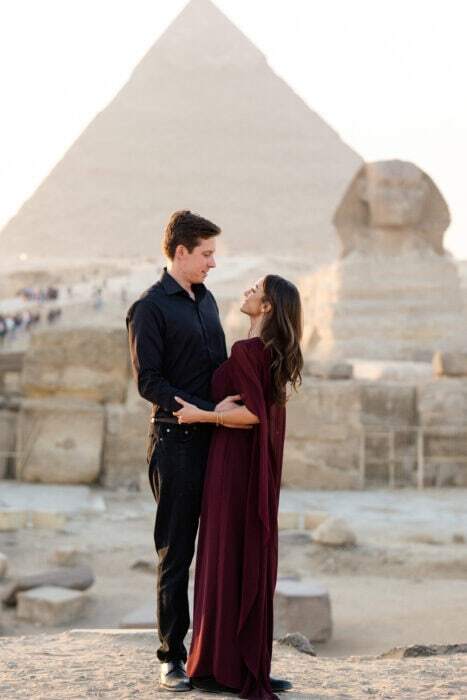
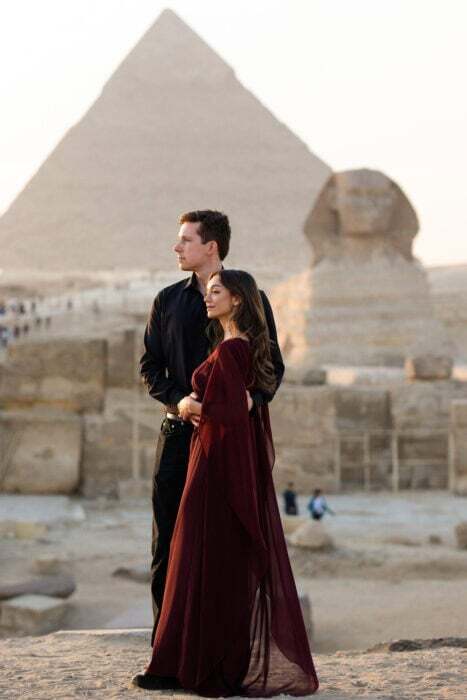
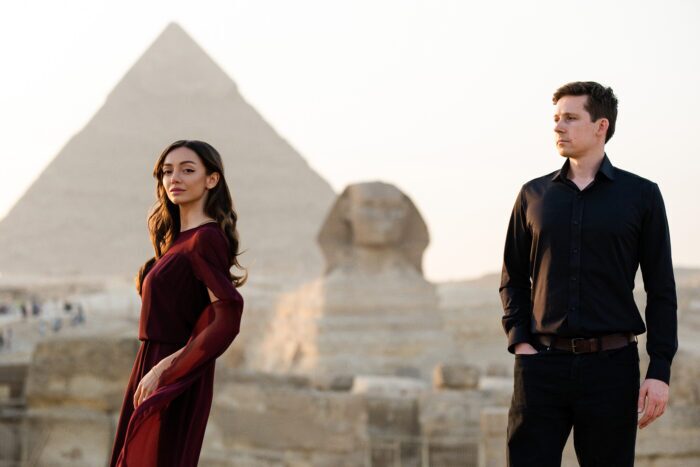
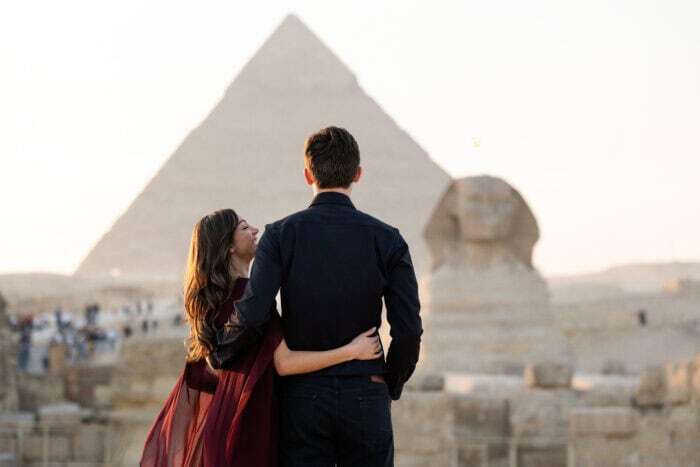
The Sphinx sits in a limestone pit near the eastern edge of the complex, just below the Pyramid of Khafre. Most visitors see it from the upper viewing terrace — a perfectly fine vantage point, but a crowded one by 9 a.m. If your photographer positions you on the descending path with the Sphinx at mid-frame, you get scale and intimacy at the same time.
What makes the Sphinx exceptional for portraits is the texture. The weathered limestone, the worn face, the contrast of ancient stone against desert sky — these are the elements that make a photo feel like it belongs in a different era entirely. Morning light hits the Sphinx’s face directly from the east, which means the first two hours after sunrise give you the best conditions.
For solo travelers especially, the Sphinx is the standout solo portrait location on the plateau. The scale makes you feel small (intentionally) and the composition nearly always works.
3. The Valley Temple
Fewer than 10% of visitors to Giza make it to the Valley Temple — which is exactly why it’s worth adding to your shoot. Located adjacent to the Sphinx, the Valley Temple is a 4,500-year-old mortuary complex built from massive pink granite blocks. The interior corridors are dark, cool, and architecturally striking in a way that’s completely different from the open desert plateau.
For photographers, the Valley Temple creates contrast: interior light filtering through narrow openings, rough-cut ancient stone as the background, and genuine quiet. It’s the spot for portraits that feel private and atmospheric rather than epic and wide-angle. Couples who want something intimate rather than grand tend to love these images. Note that interior photography access can vary — confirm with your photographer ahead of time.
4. The Desert Plateau (West Side — Crowd-Free Dunes)
Walk west past the panoramic viewpoint and the pavement ends. What you find is the actual Sahara Desert — open, quiet, and unpopulated until the tour buses arrive mid-morning. This is the location for anyone who wants images that feel genuinely remote: just sand, sky, and the pyramids as a distant silhouette.
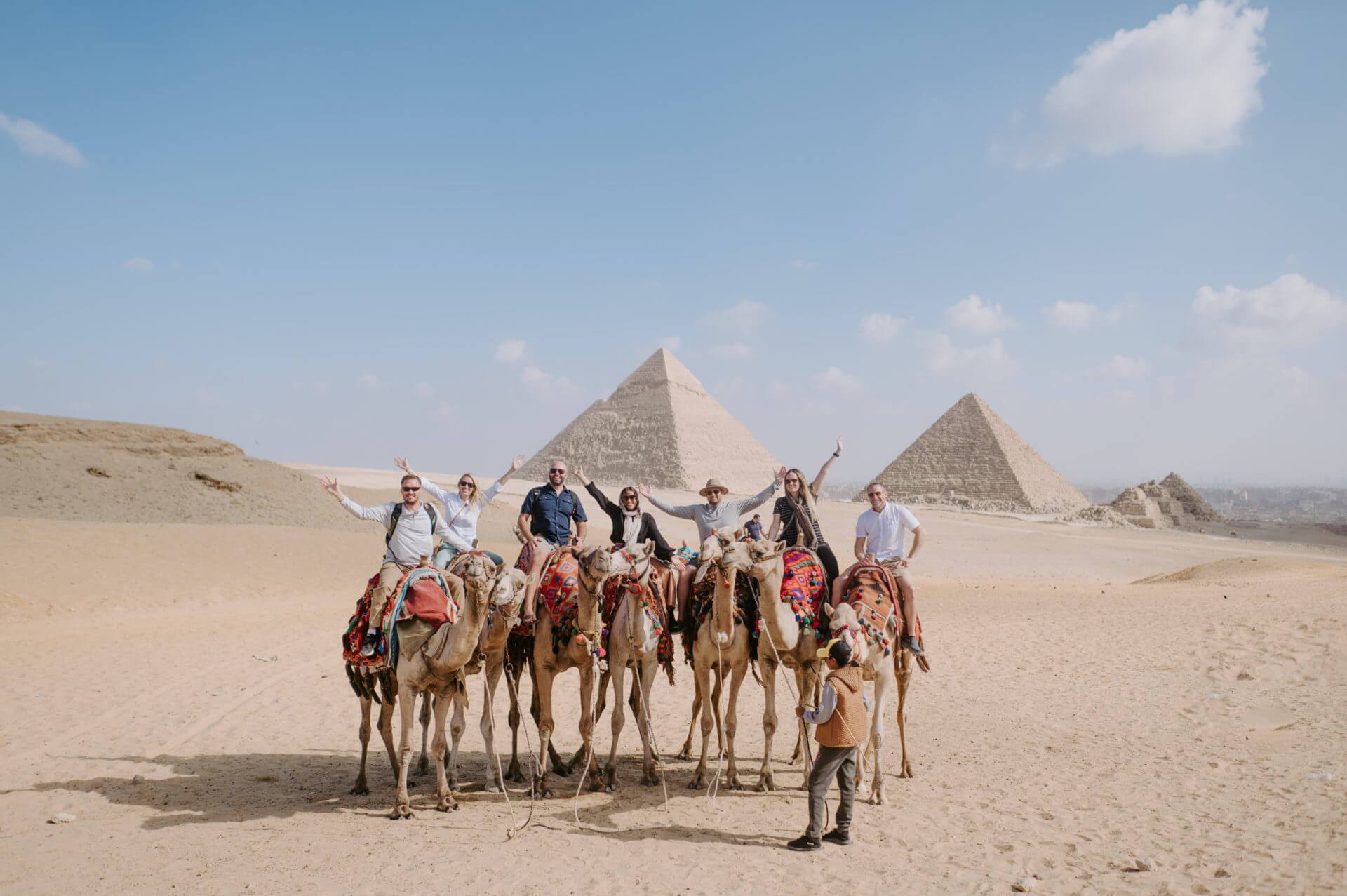
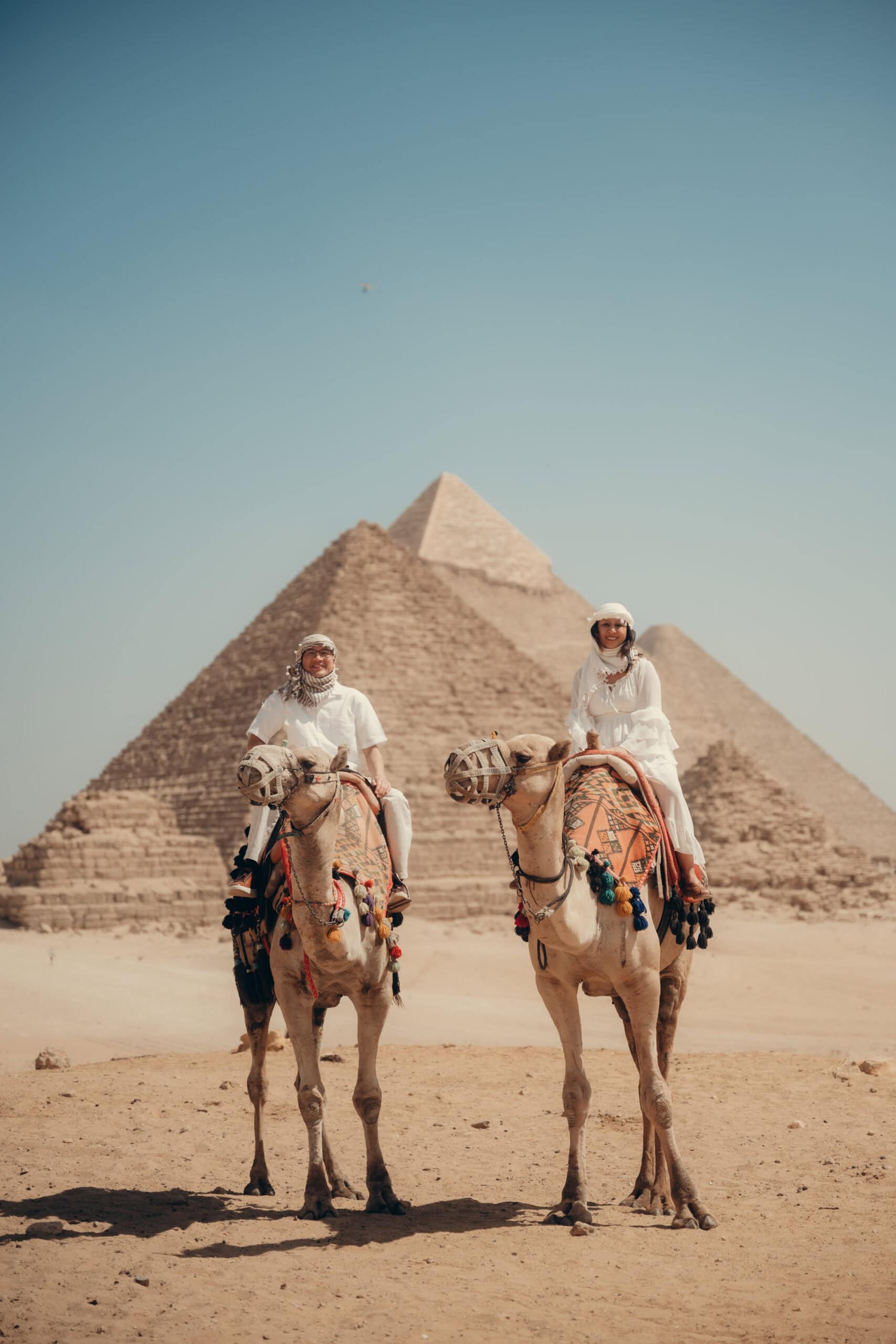
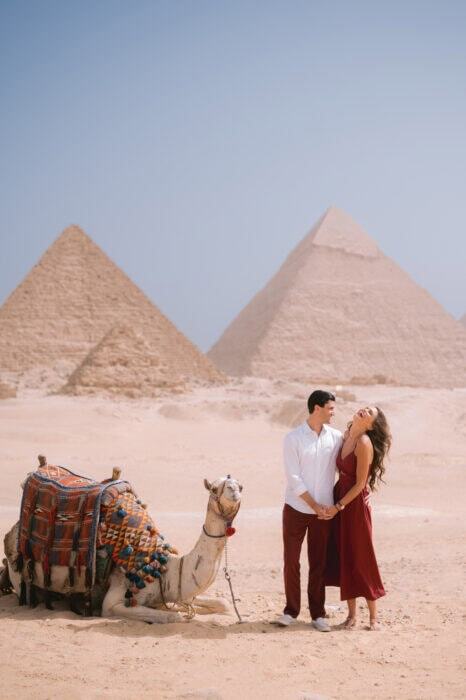
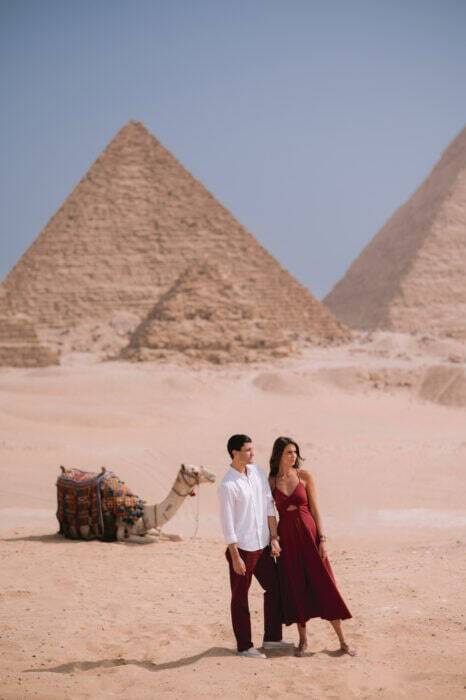
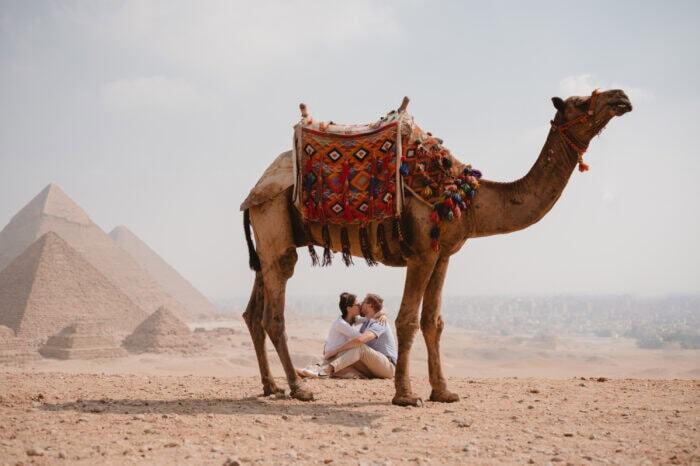
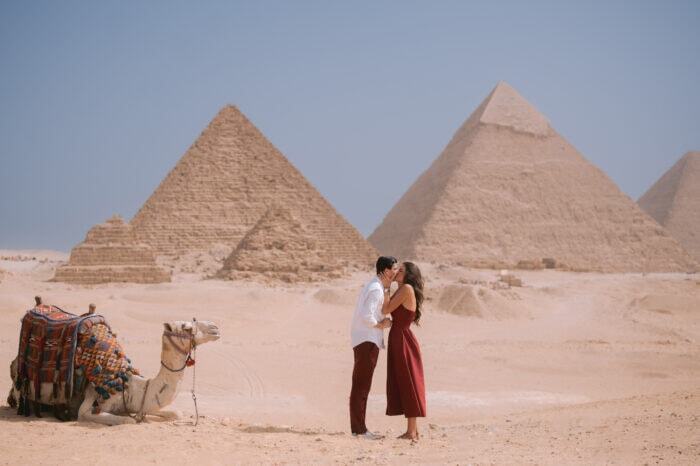
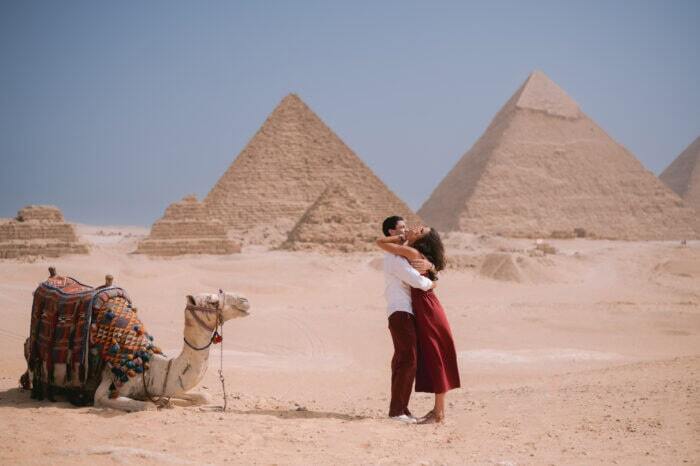
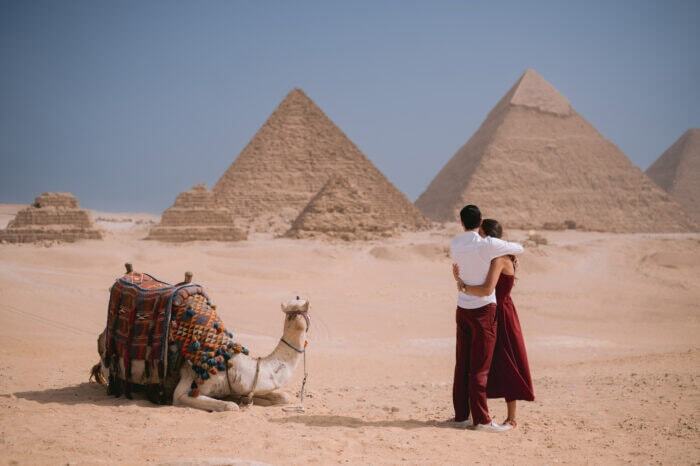
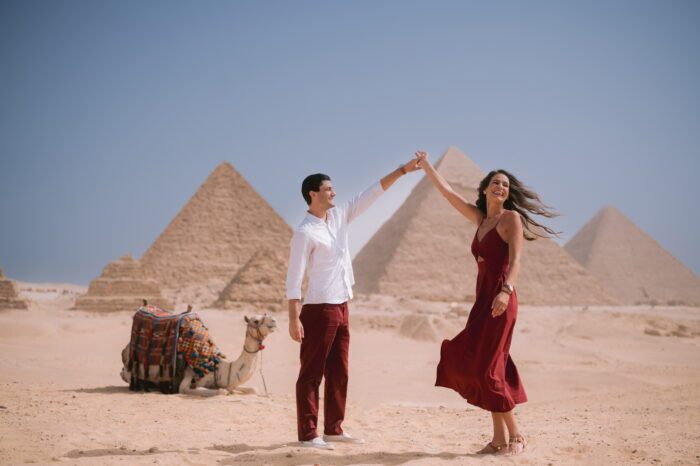
Your Local Lens photographer can arrange camel access at this location, which transforms the visual entirely. A camel silhouette against a soft sunrise sky with the pyramids behind you is one of those images that’s instantly recognizable as Egypt — and impossible to recreate anywhere else on earth. Solo travelers and couples both use this spot well. Families with young kids find the loose sand and distance from facilities a bit harder to manage, but not impossible.
Timing Guide: When to Shoot
Timing a Pyramids photoshoot isn’t optional advice — it’s the difference between an extraordinary image and a frustrating morning spent dodging tour groups in flat overhead light.
Best Time of Day: Sunrise, Every Time
The Giza Plateau opens at 8:00 a.m. Plan to be in position by 7:30 a.m. — many photographers arrive earlier to scout before access opens. Here’s why sunrise is the right call:
Light: Warm, directional, golden. At sunrise, the sun rises almost directly behind you at the panoramic viewpoint, illuminating the pyramid faces without harsh shadows. By 10:00 a.m. the light has already shifted to overhead and harsh.
Crowds: The site is nearly empty in the first hour. Tour buses, day-trippers, and organized groups typically arrive between 9:30 and 10:30 a.m. After that, the panoramic viewpoint in particular becomes extremely busy.
Camel touts: The vendors and touts who approach visitors persistently throughout the day are largely absent in the early morning. Arriving early makes the experience significantly more relaxed.
Temperature: Egypt is hot. Sunrise temperatures are genuinely comfortable even in summer months. By midday, conditions on the open plateau can exceed 100°F with no shade.
Golden hour (evening): Sunset is the second-best window. The complex closes at 5:00 p.m., but the road outside the western plateau remains accessible, and some photographers position clients just outside the official closing boundary for the final light. Coordinate this with your Local Lens photographer in advance.
Best Season to Visit
October through February is the sweet spot. Temperatures are mild — typically 65–75°F during the day — skies are clear, and the light has a quality the summer months simply can’t match. This is also peak tourist season, so you’ll have more company, but arriving at sunrise manages that entirely.
March through April is a strong second option. Temperatures climb but mornings are still very manageable, crowds thin compared to peak winter months, and flights can be meaningfully cheaper.
May through September: Possible with planning, but demanding. Temperatures regularly exceed 95°F on the plateau by mid-morning. A sunrise session becomes essential rather than just recommended. Bring water, dress in light layers, and plan for a shorter shoot window than you would in cooler months.
Tickets and Site Access
Here’s what you’ll actually need to budget for your Pyramids visit.
Entry Fees (2026)
Ticket prices are listed in Egyptian Pounds (EGP); USD approximations are provided for reference and will vary by exchange rate. Purchase tickets at the official entrance gates. Most accept credit card, but having some Egyptian Pounds in cash is useful.
General plateau admission (exterior of all three pyramids + Sphinx access): 700 EGP for adults, 350 EGP for students with valid ID.
Interior of the Great Pyramid of Khufu: 1,500 EGP. Entry is limited daily — if this is on your list, plan to be at the gate when it opens.
Interior of the Pyramid of Khafre: 280 EGP. Note: Khafre’s interior is not always open simultaneously with Khufu’s. Check on arrival.
Interior of the Pyramid of Menkaure: 200 EGP.
Children under 6 typically receive free entry.
Valley Temple: Accessible on the general plateau ticket — no separate entry required.
Panoramic viewpoint (western plateau): The road to the main panoramic spot is accessible by vehicle and typically does not require a separate ticket, though policies can vary. Your Local Lens photographer navigates this regularly and will manage access logistics for you.
Camel and Horse Rides
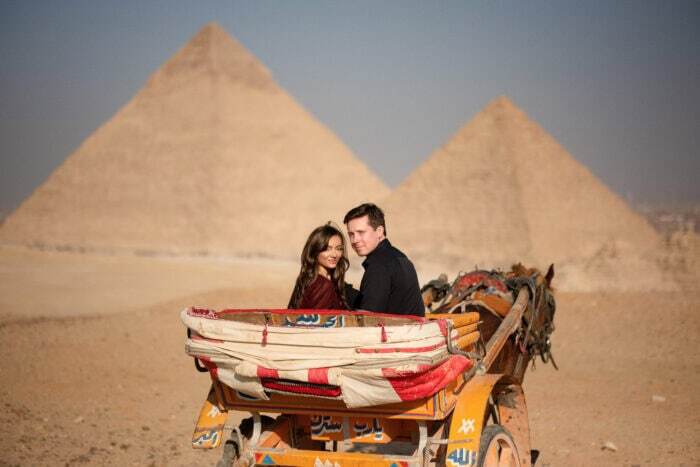
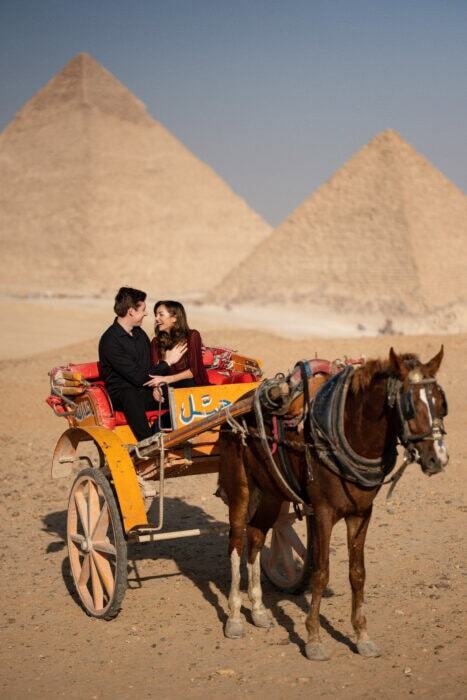
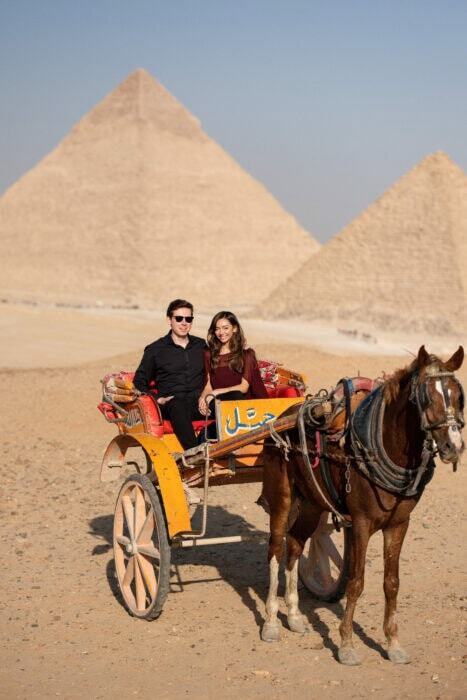
Camel and horse rides are a quintessential part of the Giza experience and prices are negotiable — expect to pay roughly 300–800 EGP ($10–$30 USD) for a short ride around the panoramic viewpoint area. If you want to incorporate a camel into your photoshoot, let your Local Lens photographer know when you book — they can coordinate timing and positioning to use the camel as a compositional element rather than just a prop.
A note on tout pressure: Vendors will approach you throughout the site offering rides, guides, and souvenirs. Having a photographer with you significantly reduces the friction — they know how to handle it and keep the session on track.
Photography Permit
There is no separate photography permit required for personal or professional photography on the Giza Plateau. Commercial film productions and certain large-scale shoots may require separate permissions through the Egyptian Ministry of Tourism and Antiquities, but for a Local Lens vacation photoshoot, your standard admission ticket covers it.
How to Plan Your Pyramids Photoshoot
Step 1: Book Your Local Lens Photographer First
Start here. Your photographer determines your start time, your access route, and which spots you prioritize based on conditions that day. Local Lens photographers in Cairo shoot the Giza Plateau regularly — they know which dunes catch the best light, how to position you to get the pyramids in frame without a tour group, and when to move between spots. Book at least two to three weeks in advance during peak season (October–February). See Local Lens Cairo packages below.
Step 2: Confirm Your Session Time
Tell your photographer your travel dates and they’ll lock in the best available sunrise window. If you’re visiting during winter peak season, sunrise is later (around 6:30–7:00 a.m.) and the weather is genuinely pleasant. Summer sessions start earlier and move faster to beat the heat.
Step 3: Arrange Transport
The Pyramids are located in Giza, about 45 minutes to an hour from central Cairo depending on traffic. Your Local Lens photographer can recommend reliable transportation options, or your hotel can arrange a driver. Ride-sharing apps also work well but can be slower to arrive at the plateau entrances before 8 a.m.
Step 4: Decide What You Want
Come in with a rough priority list — which spots matter most, whether you want a camel in the session, whether anyone wants to go inside a pyramid. This helps your photographer sequence the shoot efficiently so you’re at each location at the optimal light window without rushing.
What to Bring
- Comfortable walking shoes (the plateau is uneven stone and sand)
- Water — more than you think you need
- Sunscreen and a hat (even in winter, reflected desert sun is intense)
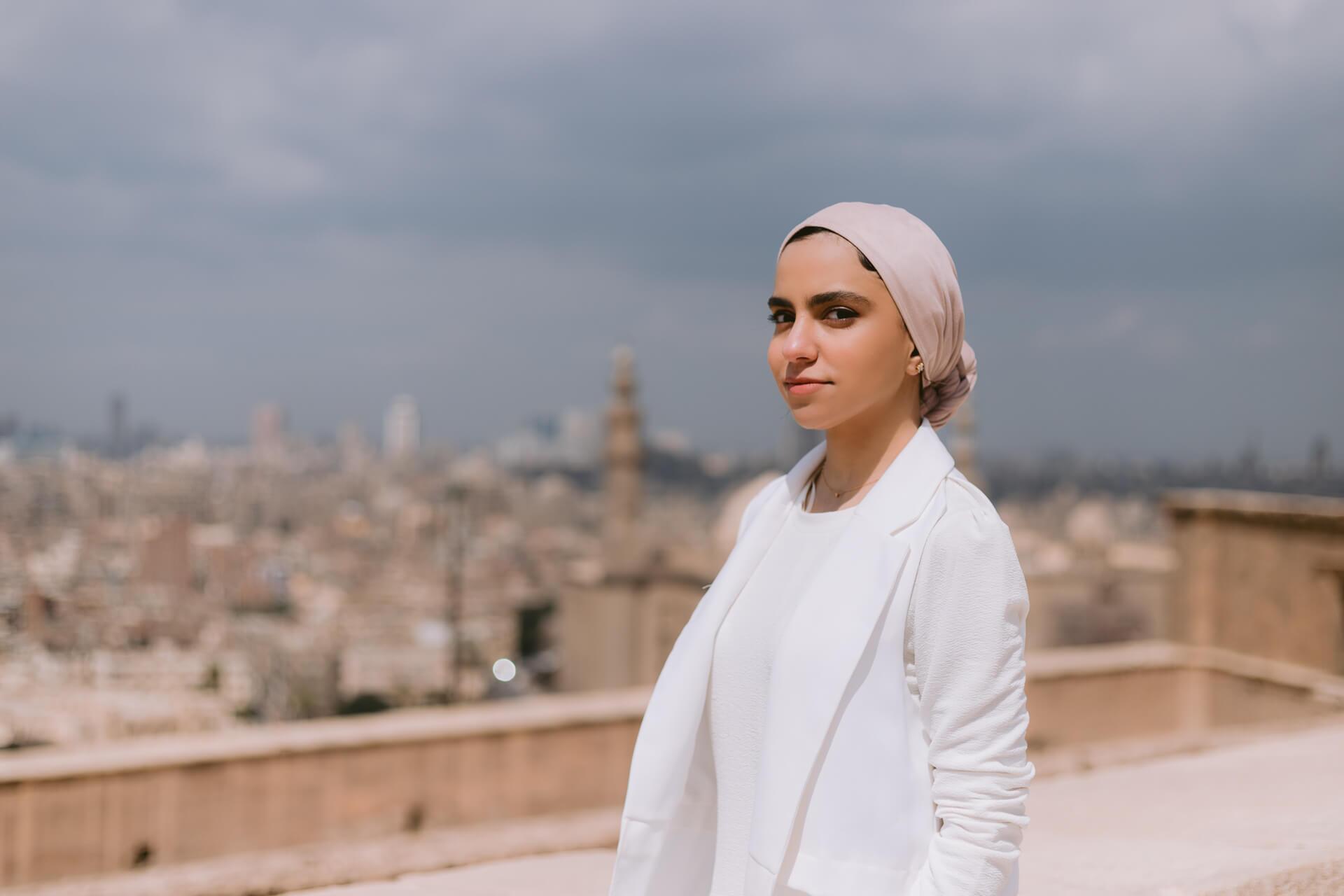
- A light scarf or cover-up for women, which is useful for both sun protection and cultural respect near local vendors and guides
- Egyptian Pounds in small bills for tips and any incidental purchases
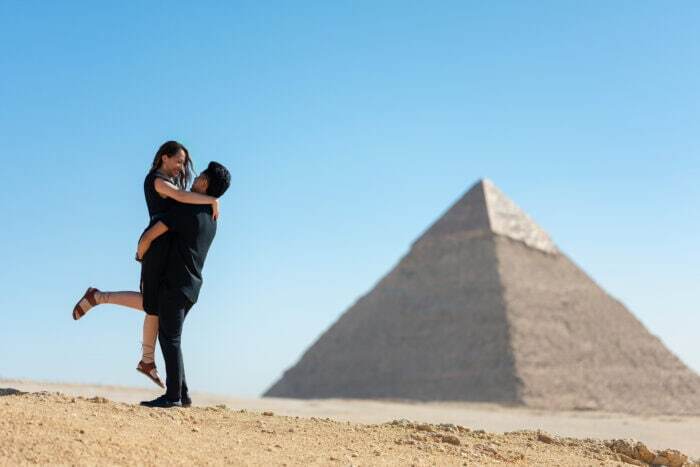
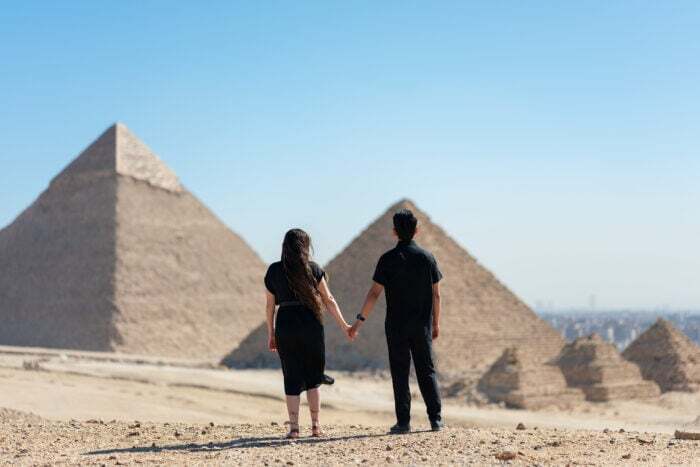
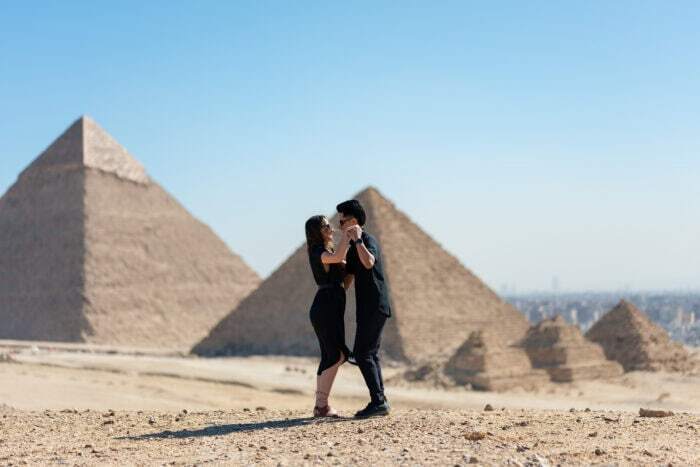
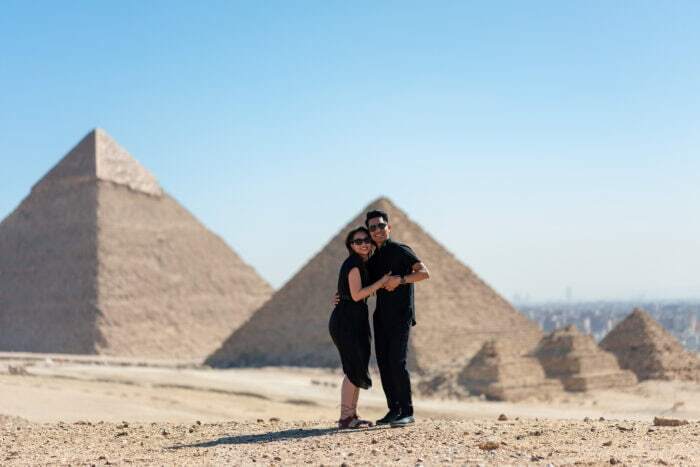
What to Wear
The desert and ancient limestone create a very specific visual palette — warm tans, sandy golds, deep ochres, and a wide open sky that shifts from navy blue at sunrise to bright clear blue by mid-morning. What you wear either works with this palette or fights it.
Colors That Photograph Best
Earth tones: Terracotta, warm rust, camel, warm white, and burnt orange feel like they belong to the landscape. These aren’t blending-in colors — they’re complementing colors. The pyramids are warm stone; your outfit echoes it rather than competing.
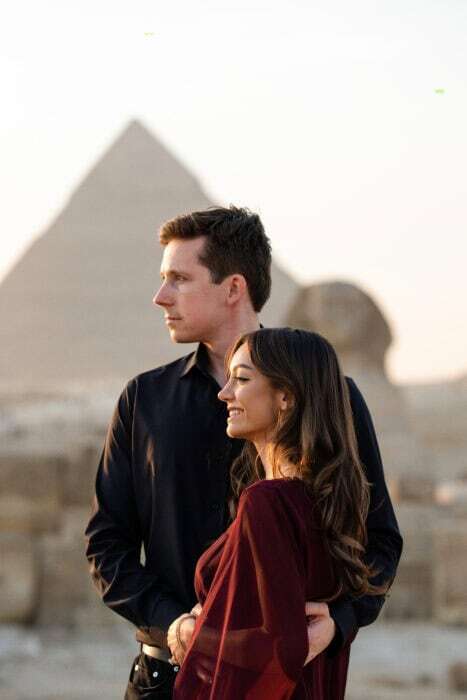
Deep, rich tones: Dusty rose, sage green, deep burgundy, and warm navy all photograph beautifully against sand and stone. These add visual contrast without the harshness of bright primary colors.
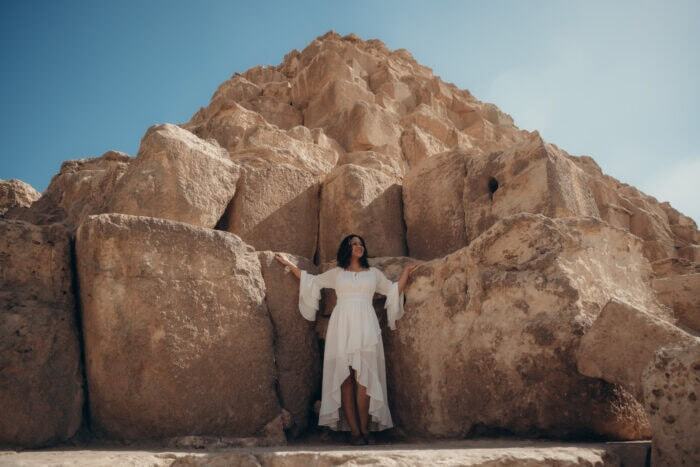
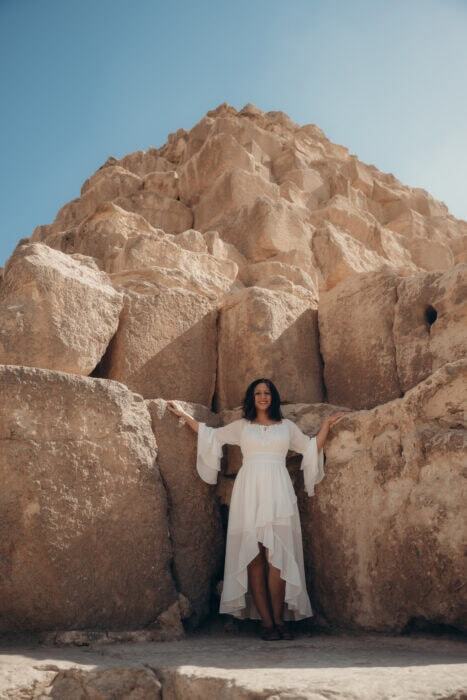
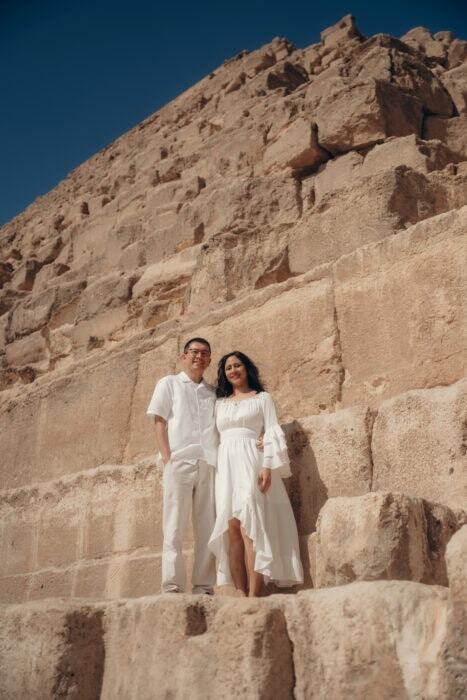
White and cream: Genuinely iconic at the pyramids. A flowing white dress or linen shirt in cream catches the warm morning light and creates a clean contrast against the textured stone. It also reads as timeless in the final images.
What to avoid: Neon colors, loud patterns, and anything with heavy graphic elements. The monuments are doing a lot of visual work — your outfit should complement, not compete.
For Couples
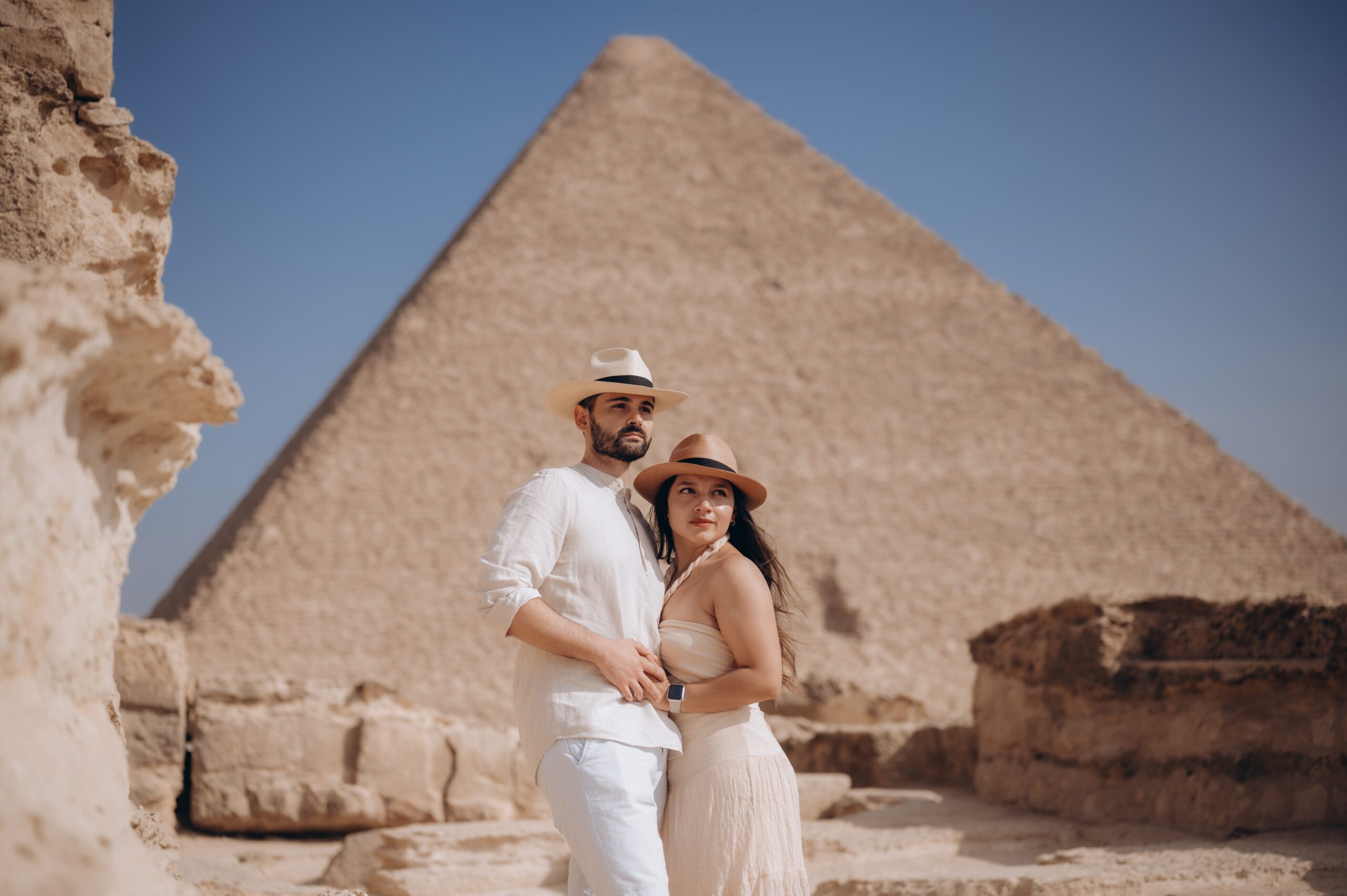
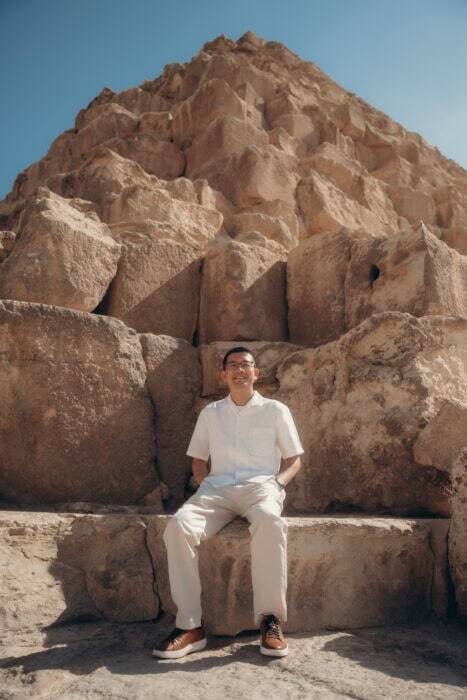
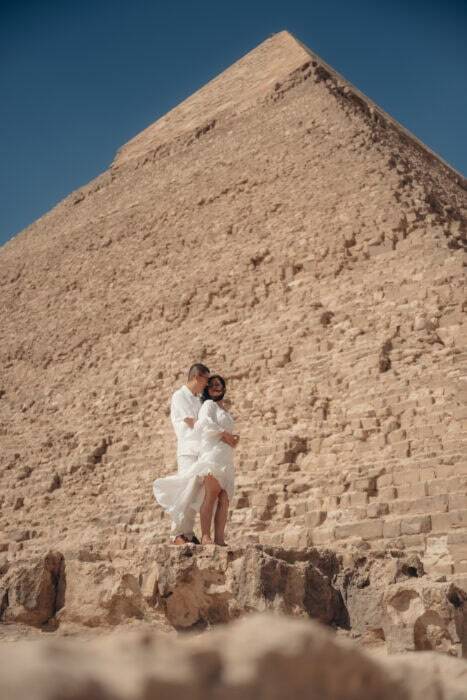
Coordinate without matching exactly. A classic pairing: one person in warm white or cream, the other in earthy olive or warm tan. Flowy fabrics and natural textures (linen, cotton, light gauze) look better in the desert than stiff or heavily structured clothing. Skip formal gowns for the sandy dunes — save anything floor-length for the stone walkways near the Sphinx and Valley Temple where the ground is more manageable.
For Families
Keep the palette cohesive — matching tones rather than identical outfits. Earthy neutrals, white, and soft blue all coordinate well. Toddlers in simple white or linen look genuinely wonderful against the pyramids. Avoid shoes that are difficult to get on and off; you’ll be moving between surfaces throughout the session.
For Solo Travelers
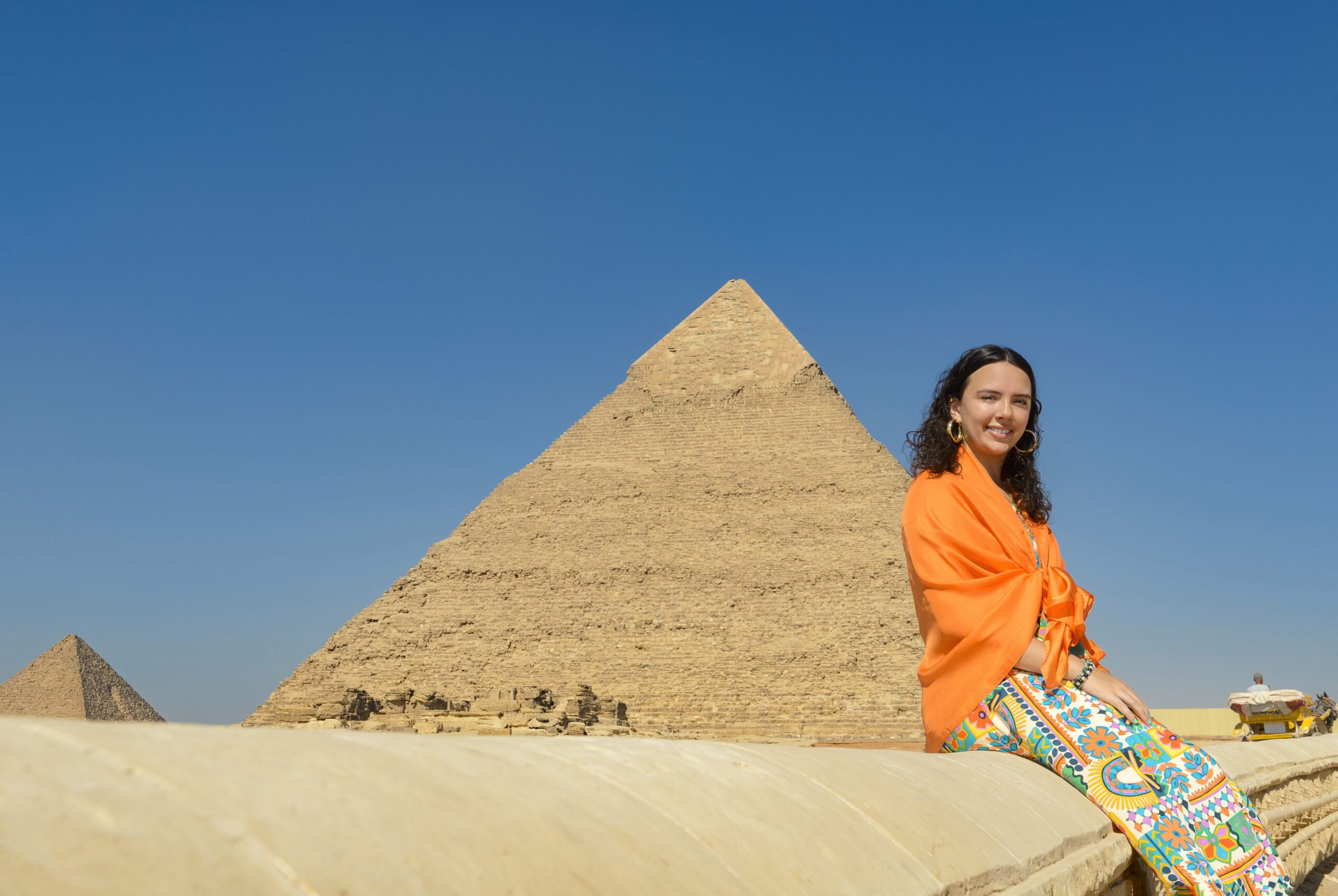
Solo shoots at the pyramids are a real thing, and they produce some of the most striking images on our platform. You have full creative control — wear whatever makes you feel your best against the landscape. A bold color (deep red, warm orange, strong blue) creates intentional contrast and draws the eye directly to you in the frame. If you’ve ever wanted to wear something a little dramatic for a photoshoot, this is the location for it.
Local Lens Egypt Packages
Every Local Lens photoshoot in Cairo includes a professional local photographer, high-resolution edited images delivered within five business days in a private online gallery, and the flexibility to choose the spots and moments that matter most to you.
→ Browse all Local Lens Cairo photography packages and pricing
What’s included with every package:
- A Local Lens photographer who shoots the Giza Plateau regularly
- Scout-level knowledge of sunrise access, crowd timing, and best angles
- A private online gallery with your edited images
- Guidance on outfit colors, logistics, and site access before you arrive
Popular sessions:
Couples photoshoot at the Pyramids — Our most-booked Cairo session. Usually a 1–2 hour sunrise shoot covering the panoramic viewpoint, the Sphinx, and a dune or two for variety. Some couples add a camel for a few frames. See honeymoon and couples sessions at the Pyramids of Giza →
Family photoshoot at the Pyramids — Sunrise sessions work especially well for families because the plateau is quieter and cooler. Your photographer positions everyone efficiently and keeps things moving so kids stay engaged. Read real family reviews from Cairo shoots: see couples and families at the Pyramids →
Solo traveler photoshoot — One of the most empowering shoots we offer. You don’t need to hand your phone to a stranger. Book a photographer, get an hour at the most iconic location on earth, and have professional images that actually look like you were there.
👉 Ready to book? → Find a Local Lens photographer in Cairo, Egypt
Rated 4.9 stars by 1,000+ customers. High-resolution images delivered within five business days.
Frequently Asked Questions
Do I need a photography permit for a professional photoshoot at the Pyramids? No separate permit is required for personal or vacation photography, including working with a Local Lens photographer. Standard plateau admission covers it. Large commercial productions may require separate permissions — but that’s not what a vacation photoshoot is.
What time does the Giza Plateau open? The complex opens at 8:00 a.m. daily. Most Local Lens photographers will arrange to meet you slightly before opening so you’re first on the plateau when gates open.
Can we go inside the pyramids during our photoshoot? Yes — though interior access requires a separate ticket for each pyramid you’d like to enter. Interior spaces are narrow and dark (there’s no artificial lighting inside Khufu’s), so photography inside is atmospheric but challenging. Most couples and families focus their session on the exterior, which offers far more compositional variety.
Is it safe to visit the Pyramids of Giza as a tourist? Yes. The site is heavily trafficked by international tourists year-round and is well-managed. The primary challenge is persistent vendor and tout pressure — having a Local Lens photographer with you keeps the session focused and significantly reduces unwanted interruptions.
How long should we plan for a photoshoot at the Pyramids? Most Local Lens sessions here run 60–90 minutes. That’s enough time to cover the panoramic viewpoint, the Sphinx, and one additional spot (Valley Temple or the desert dunes). If you want all four spots plus a camel, a 2-hour session gives more breathing room.
What’s the best season for a Pyramids photoshoot? October through February offers the most comfortable temperatures and the best light. Mornings are clear, cool, and golden — ideal conditions for outdoor photography. March and April are also excellent. Summer sessions are doable but require earlier start times and realistic expectations about heat.