Park Güell Proposal, Barcelona: Best Spots, Timing & Photographer Packages
Park Güell is one of the most visually alive settings in all of Europe. A mosaic dragon staircase, vaulted stone columns, panoramic Mediterranean views, and Gaudí’s unmistakable handwriting on every surface
The catch: over four million people visit each year, and the Monumental Zone requires advance timed-entry tickets that sell out fast. Plan early, book the first slot of the day, and hire a Local Lens Barcelona photographer who knows exactly where to stand and when. Here’s everything you need.
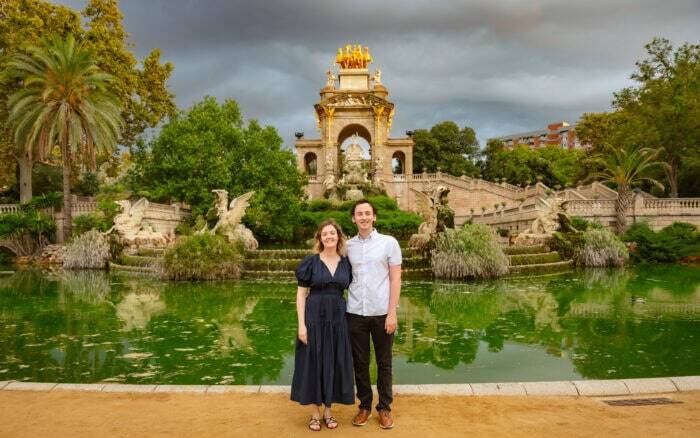
Park Güell Proposal Packages with Local Lens
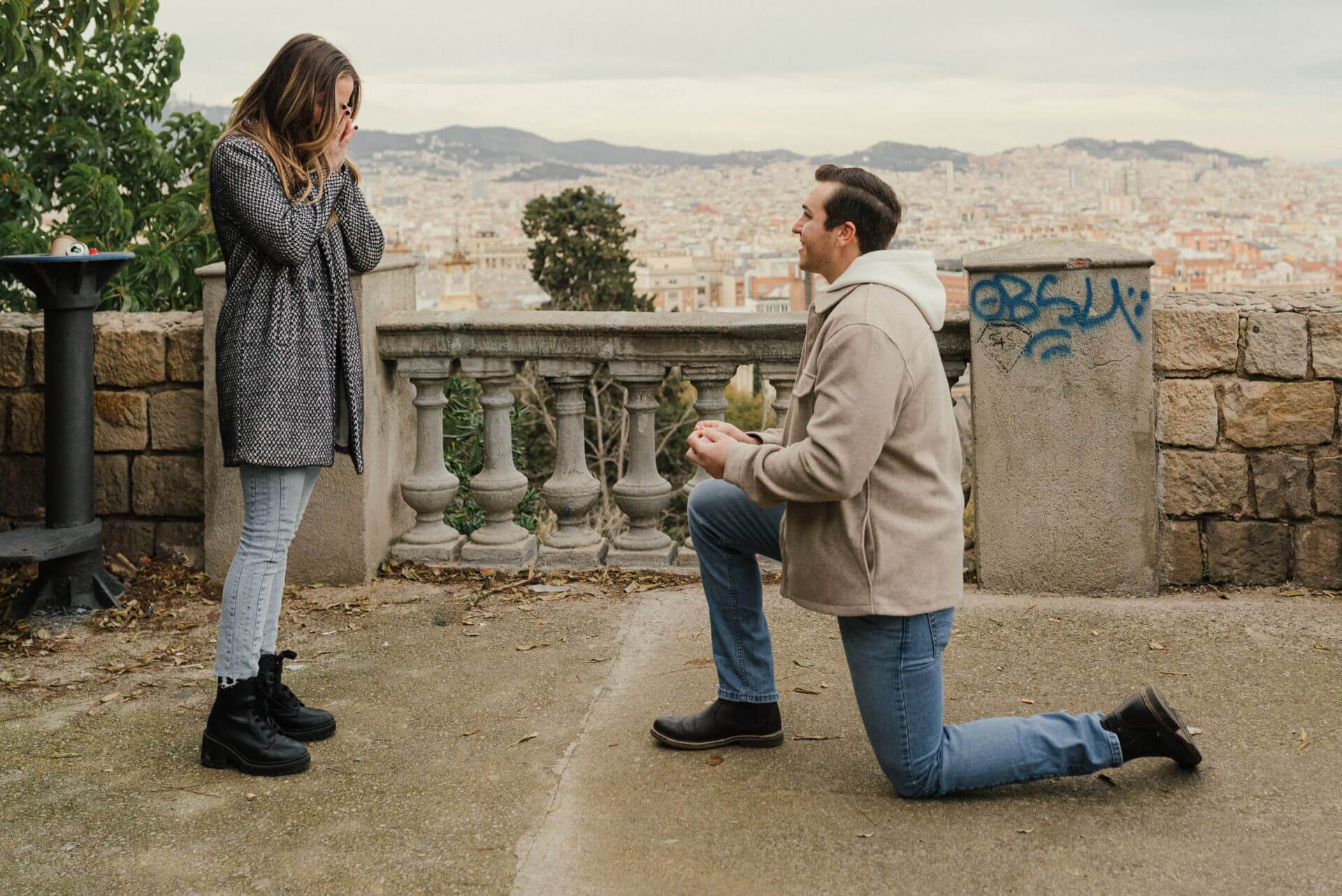
A Local Lens photographer in Barcelona can be at Park Güell before the crowds arrive — positioned, ready, and completely invisible to your partner. That’s what makes the difference between a photo you’ll hang on the wall and a phone screenshot you’ll regret.
What’s included:
- Pre-shoot location scouting and spot recommendations for Park Güell
- Your photographer’s timed-entry ticket (coordinated with yours)
- Candid coverage of the proposal moment, your first reaction, and portraits after
- Edited digital gallery delivered within 7 days
- Unlimited scenes across the Monumental Zone during your session
Local Lens Barcelona Proposal Packages:
| Package | Duration | Photos Delivered |
|---|---|---|
| Proposal Moment | 30 minutes | 30+ edited images |
| Proposal + Portraits | 1 hour | 60+ edited images |
| Half-Day Barcelona | 3 hours | 150+ edited images |
The Half-Day package is worth considering if you want to continue into the Gràcia neighborhood or down to the Gothic Quarter after the proposal.
👉 Book a Local Lens Barcelona Photographer →
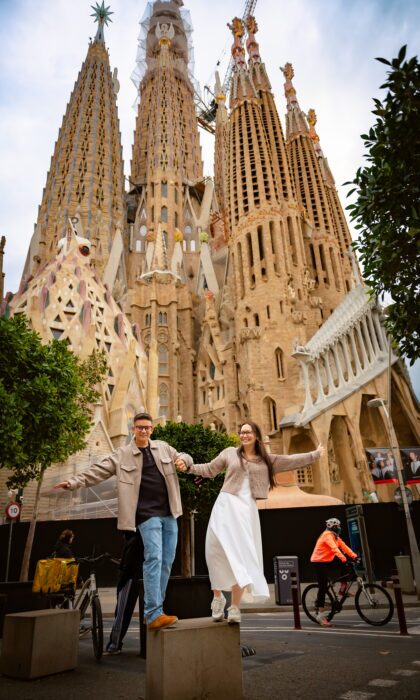
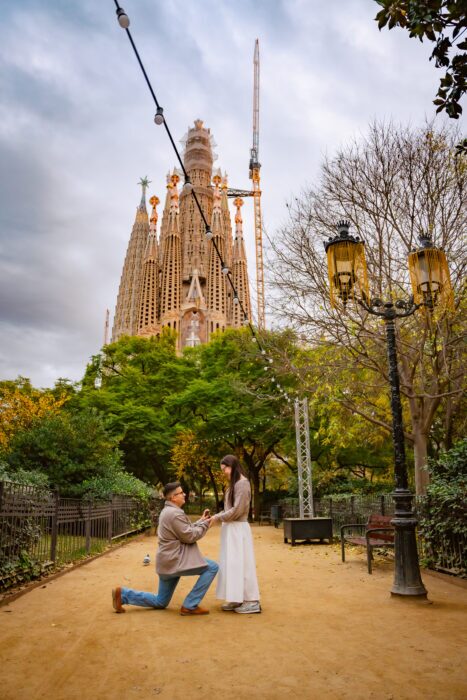
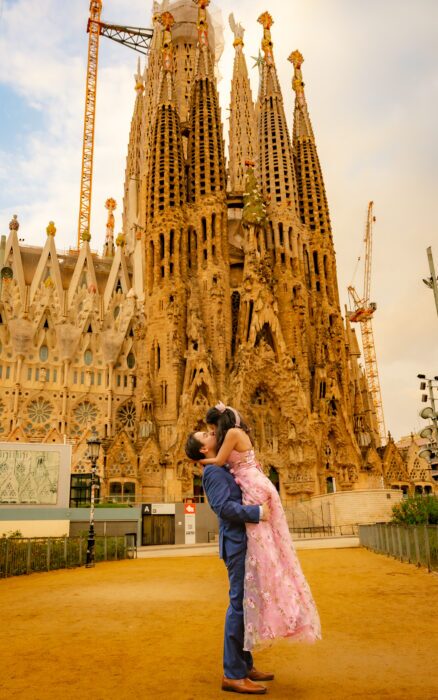
Best Spots to Propose at Park Güell
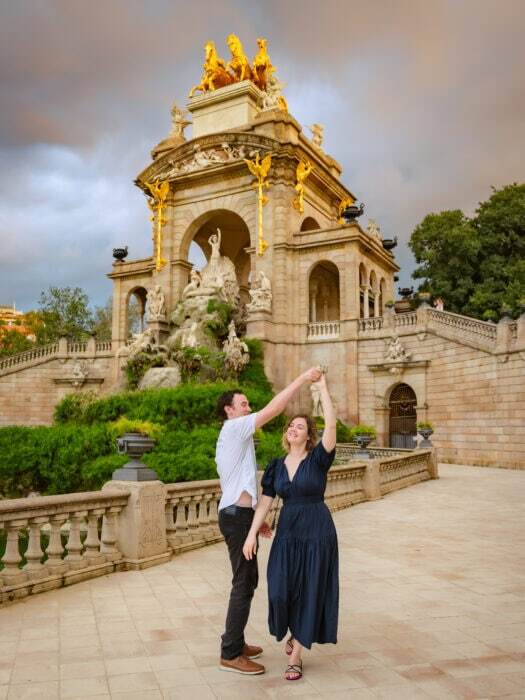
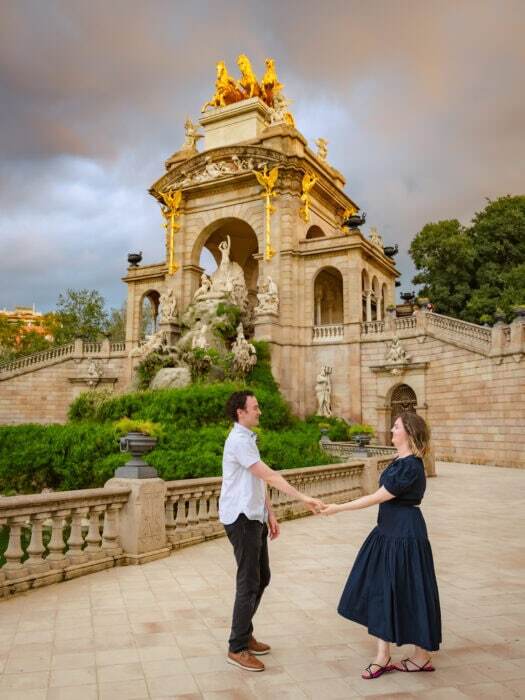
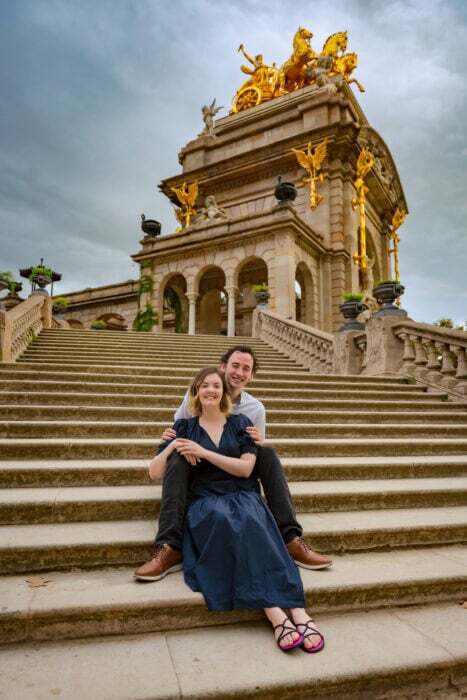
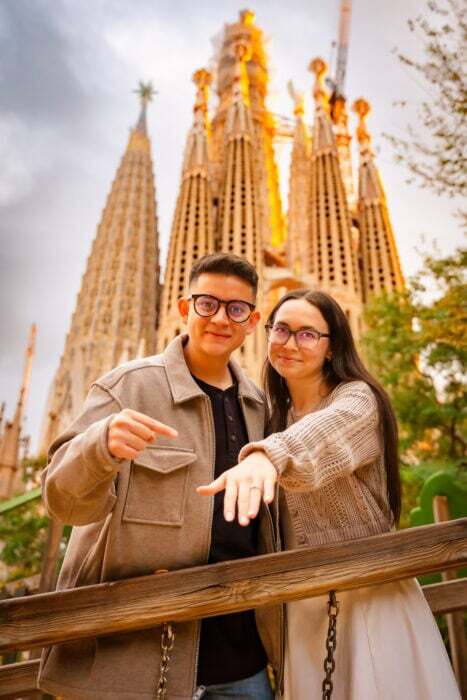
The Main Terrace (Nature Square) and Mosaic Dragon Staircase
This is the heart of Park Güell — the long serpentine bench tiled in trencadís mosaic wraps the edge of the main terrace, and the famous dragon staircase leads up from the entrance below. The terrace itself faces southwest, which means late afternoon light hits the mosaics and turns everything warm. Morning is when the terrace is closest to empty.
For proposals: Stand near the outer rail of the serpentine bench at the far ends, away from the center — that’s where the foot traffic concentrates. Your photographer can anchor below or to the side, framing you against the city and the sea. The dragon at the base of the staircase makes a strong secondary backdrop for portraits.
The Hypostyle Room (Hall of a Hundred Columns)
Technically 86 columns, but the name sells it short. The vaulted ceiling is covered in white ceramic medallions and broken china mosaic — it filters light softly and creates a completely different atmosphere than the open terrace above. It’s shaded, cool, and structurally dramatic.
For proposals: The columns create natural frames. Ask your photographer to shoot through a gap in the columns as you propose — the depth adds something that open-air shots don’t have. Midday, when the terrace above is at peak heat and crowd, the Hypostyle Room stays cooler and gets ignored by most visitors. Use that.
The Viaducts
Three elevated stone walkways wind through the upper forest zone — the Laundry Room Viaduct, the Coach Viaduct, and the Washerwoman Viaduct. They’re built from raw Catalan stone, shaded by pine trees, and almost entirely overlooked by the main visitor flow. You’ll have near-privacy here even at peak hours.
For proposals: The viaducts work best for couples who want something intimate rather than sweeping. Dappled light through the pines, stone archways framing you, no tour groups in the background. Walk to the end of any viaduct and you can find a genuinely quiet moment.
The Hilltop Viewpoint — Turó de les Tres Creus
Above the Monumental Zone, a path leads to the three crosses at the top of Carmel Hill. It’s a five-minute walk beyond the main terrace and most visitors don’t make it up. From here, you see the full Barcelona grid, the coast, and on a clear day, straight across the Mediterranean.
For proposals: The climb is worth it if you want zero foot traffic and a 360-degree backdrop. Your Local Lens photographer can position slightly below you to frame the city behind both of you. Go here first thing at opening — you’ll have it to yourself.
Timing Guide: When to Go and How to Avoid the Crowds
Best Time of Day
The 9:30 AM opening slot is the one to book. Arrive 15 minutes early at the gate.
For the first hour after opening, the main terrace and serpentine bench have a fraction of the crowd they’ll carry by 11 AM. The light at this hour is soft and directional — flattering for photos, forgiving of hazy skies. By 11:00 AM to 3:00 PM, the park reaches peak density and the terrace can feel genuinely shoulder-to-shoulder.
Late afternoon — after 4:00 PM — is the next best window. Crowds thin noticeably, and from April through early October, you get golden hour light over the city. The tradeoff: it’s not as quiet as first entry, and in summer the heat of the day is still in the stone.
Best Season
April, May, September, and October are the sweet spot: mild weather, manageable crowds, and long enough days for flexible timing. Spring and fall also tend to have better sky quality for photos than the flat bright overcast of August.
Summer (June–August) is the peak of everything — heat, crowd, ticket sell-outs. It’s still doable with the 9:30 AM slot, but requires more planning. Winter is quiet and genuinely beautiful, though the park closes earlier and the day is shorter.
Avoiding Tour Groups
Tour groups typically arrive between 10:00 AM and 12:30 PM. They move in clusters through the dragon staircase, the terrace, and the Hypostyle Room in that order. Your best move: enter at 9:30, hit the terrace first, then move to the viaducts or hilltop while the groups are concentrated below. By the time you come back down, the groups have cycled through.
Weekdays — particularly Tuesday through Thursday — are noticeably quieter than weekends, even in summer.
Tickets and Access: What You Need to Know
Timed Entry Is Mandatory
Walk-up tickets to the Monumental Zone no longer exist. Every visit requires a ticket booked in advance online, and you enter within a 30-minute window of your booked time. Miss the window, and you’re locked out.
Book on the official Park Güell website: parkguell.barcelona
Current 2026 Pricing
| Ticket Type | Price |
|---|---|
| Adults (13+) | €13 |
| Children (7–12) | €8 |
| Under 7 | Free |
| Guided tour ticket | €26–€28 |
Note: Prices increased €8 in 2025. Check the official site for the most current rates before booking.
Your Local Lens photographer will need their own ticket. Coordinate timing so your entry windows match — this is part of the pre-shoot planning conversation when you book through Local Lens.
Getting There
The closest metro stops are Lesseps (L3 Green Line) and Alfons X (L4 Yellow Line), each about a 15–20 minute uphill walk to the entrance. If you want to save your legs, Bus 24 stops closer to the gate. Taxis and rideshares drop at a dedicated access point near the entrance.
The Vallcarca escalators are a local secret — they cut significant elevation off the walk from the Vallcarca metro stop. Worth knowing if one of you has mobility concerns or you’re just conserving energy for the proposal.
How to Propose at Park Güell: Step by Step
Step 1: Book your tickets and photographer together. Coordinate entry time slots so your Local Lens photographer enters at the same time or shortly before you. Brief them on exactly what you’re planning so they can pre-position. Most photographers will arrive 10–15 minutes before you to scope the spot.
Step 2: Choose your spot in advance. Don’t improvise on the day. If you want the main terrace, your photographer needs to know which section of the serpentine bench and where to stand. Discuss this during your pre-shoot check-in.
Step 3: Book the 9:30 AM entry slot. This gives you the best combination of light, quiet, and flexibility. You’ll have about 45 minutes of relative calm before tour groups arrive.
Step 4: Give your partner a loose itinerary. Tell them you’re going to Park Güell for a morning visit and some photos. Most people expecting a proposal are not expecting it at the first stop of the day — use that.
Step 5: Find the quiet moment. At the serpentine bench, walk to the far end away from the center stairs. At the viaducts, keep walking — most visitors stop at the first archway. At the hilltop, the path narrows and clears out completely. Your photographer is already there.
Step 6: Let it happen. Don’t rush the moment for the camera. Your photographer’s job is to stay invisible until the ring is out — then they move. Trust them.
Step 7: Stay for portraits. After the moment, you have the rest of your timed session. Use it. Walk the terrace, explore the columns, go back to the dragon staircase. The best portrait light is often in the 30 minutes after a proposal when you’re both completely relaxed.
Nearby Alternatives: If Park Güell Isn’t Right for You
Bunkers del Carmel
An old Civil War anti-aircraft battery on the hill above El Carmel, with a 360-degree view of Barcelona that arguably beats Park Güell’s. It’s free, no tickets required, and popular with locals — which means it attracts a very different crowd than tour-group Barcelona. Sunrise here is spectacular. The Bunkers can get crowded at sunset in summer, but at 7 AM on a weekday morning, you may have it nearly to yourselves.
Best for: Couples who want a panoramic backdrop without any ticketing logistics, or who want a more local, less curated feel.
Barceloneta Beach
The city beach, a 15-minute metro ride from Gràcia, gives you a completely different proposal register — relaxed, golden, windswept. Walk to the far end toward the W Hotel breakwater for fewer beachgoers. Sunrise proposals on Barceloneta are genuinely beautiful: the light comes off the water, the city is quiet behind you, and the palm-lined promenade is practically empty.
Best for: Couples who feel more themselves at the water than at a monument, or who want a second location after a Park Güell morning session.
The Gothic Quarter
Barcelona’s medieval neighborhood — narrow stone lanes, hidden plazas, lantern light — is one of the most photogenic urban environments in Europe. Plaça de Sant Felip Neri is the most cinematic of the hidden squares. The quarter is best in the very early morning (before 9 AM) when the streets are empty, or late evening when the tour volume drops.
Best for: Couples who want intimacy over grandeur, or who are based in the Gothic Quarter and want something close to their hotel.
FAQ
Do I need a permit to propose at Park Güell? No permit is required for a spontaneous proposal. Your timed-entry ticket covers your visit. If you’re planning a more elaborate setup — decorations, a musician, a planned group gathering — contact Park Güell management in advance, as these may require separate authorization.
Can my photographer get in with us? Yes. Your Local Lens photographer purchases their own timed-entry ticket, coordinated to match your entry slot. This is standard practice and part of the pre-shoot logistics your photographer will handle.
What if it rains? Barcelona’s Gaudí architecture looks extraordinary in rain — the mosaics get saturated color and the crowds thin dramatically. Your Local Lens photographer can advise on rescheduling if conditions are genuinely bad, but most photographers prefer a light overcast or even light rain to harsh midday sun.
Is Park Güell accessible for visitors with mobility needs? The Monumental Zone includes some steep paths and stairs, particularly around the dragon staircase. The main terrace is accessible once you’re there. The Vallcarca escalators make the approach easier. Contact Park Güell directly for the most current accessibility information.
How far in advance should I book Park Güell tickets? During summer (June–August) and Easter week, book as early as possible — slots sell out weeks ahead, particularly for 9:30 AM entry. In spring and fall, two weeks ahead is typically safe. In winter, a few days may be sufficient, but there’s no reason not to book early regardless.
Is the outer park free to visit? Yes. Only the Monumental Zone — the dragon staircase, the main terrace, and the Hypostyle Room — requires a paid timed-entry ticket. The forest paths, viaducts, and outer areas of the park are free and open all day. The Turó de les Tres Creus hilltop viewpoint is also free.
Book Your Local Lens Barcelona Photographer
Park Güell at 9:30 AM, first slot of the day, your partner thinking it’s just a morning visit. That’s the setup. A Local Lens photographer gets there first.
Local Lens works with photographers based in Barcelona — people who’ve shot at Park Güell dozens of times and know exactly which corner of the serpentine bench is in direct light at 9:45 AM in October, and where to stand so the city fills the frame behind you and the tour group to the left disappears.